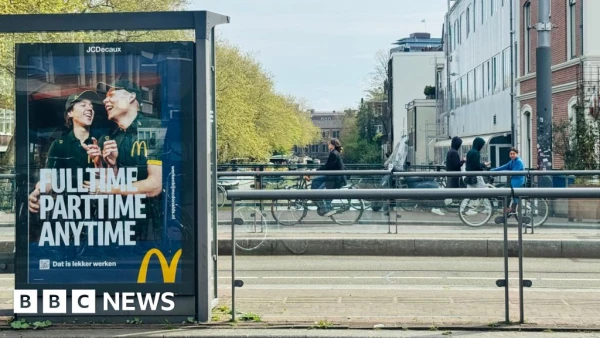
Amsterdam has made history as the first capital city in the world to ban public advertisements for both meat and fossil fuel products. Since 1 May, ads for burgers, petrol cars, and airlines have been removed from billboards, tram shelters, and metro stations across the city.
At one of Amsterdam's busiest tram stops, the advertising landscape has shifted dramatically. Posters now promote the Rijksmuseum and a piano concert, replacing previous ads for chicken nuggets, SUVs, and budget holidays.
Local politicians say the move aligns public spaces with the city's environmental targets, which aim for carbon neutrality by 2050 and a halving of meat consumption over the same period.
"The climate crisis is very urgent," says Anneke Veenhoff from the GreenLeft Party. "If you want to be leading in climate policies and you rent out your walls to exactly the opposite, then what are you doing?"
Anke Bakker, group leader for the Party for the Animals, initiated the restrictions and rejects accusations of a nanny state. "Everybody can just make their own decisions, but actually we are trying to get the big companies not to tell us all the time what we need to eat and buy," she says. "In a way, we're giving people more freedom because they can make their own choice."
Meat accounted for only about 0.1% of Amsterdam's outdoor advertising spend, compared to roughly 4% for fossil-related products. Yet the ban sends a political message by grouping meat with flights, cruises, and petrol and diesel cars, reframing it from a personal dietary choice to a climate issue.
Unsurprisingly, the Dutch Meat Association opposes the move, calling it "an undesirable way to influence consumer behaviour" and arguing that meat "delivers essential nutrients and should remain visible." The Dutch Association of Travel Agents and Tour Operators says the ban on air travel ads is a disproportionate curb on commercial freedom.
Activist Hannah Prins, a lawyer with Advocates for the Future, compares the meat ad ban to past restrictions on tobacco advertising. "That you were allowed to smoke on the train, on restaurants... that feels so weird," she says. "What we see in our public space is what we find normal in our society."
Amsterdam follows Haarlem, which in 2022 became the first city worldwide to announce a broad ban on most meat advertising in public spaces, implemented in 2024 alongside a fossil fuel ad ban. Utrecht and Nijmegen have since adopted similar measures.
Globally, dozens of cities—including Edinburgh, Sheffield, Stockholm, and Florence—have banned or are moving to ban fossil-fuel advertising. France has a nationwide ban. Campaigners hope Amsterdam's approach linking meat and fossil fuels will serve as a legal and political blueprint.
However, the ban's effectiveness is debated. While outdoor ads have been removed, the same promotions still appear in social media algorithms. There is no direct evidence yet that removing meat ads shifts societies toward plant-based diets. Still, researchers like Prof Joreintje Mackenbach from Amsterdam University Medical Center see the ban as "a fantastic natural experiment" to study whether removing cues from public spaces impacts social norms.