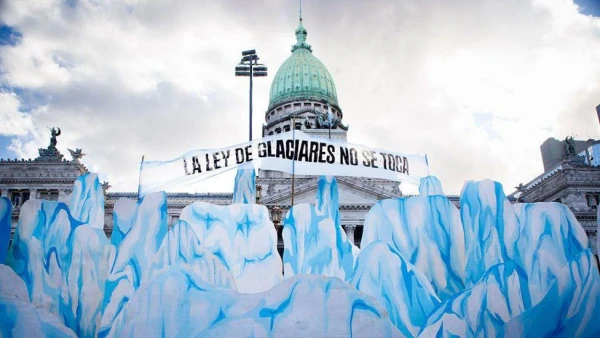
Argentina's Congress has passed a contentious amendment that eases restrictions on mining activities in glacier regions, sparking fierce debate between environmental advocates and proponents of economic development.
The reform modifies the landmark 2010 Glacier Law, which had established strict protections by prohibiting all mining and exploration in glacier areas, recognizing them as vital water reserves. The new legislation shifts authority for defining protected zones from the national Argentine Institute for Snow, Ice and Environmental Sciences (Ianigla) to provincial governments.
President Javier Milei, who championed the change, argued that it empowers provinces to utilize their natural resources more effectively. "This reform allows mining activities where there was nothing to protect," he stated, framing it as a move toward regional autonomy.
Opposition voices, however, warn of significant environmental risks. Congresswoman Natalia de la Sota emphasized the fundamental importance of water security, declaring, "Without water, we can't even think about a growth and development project."
"The primary function of all glaciers and the entire periglacial environment is to act as a freshwater reservoir," said Agostina Rossi Serra, a biologist with Greenpeace. "A large part of our country, especially the regions that were keen to see this law amended, are arid and semi-arid areas, where water is a scarce resource."
Argentina is home to 16,968 glaciers that supply water to 36 river basins across 12 provinces, supporting approximately seven million people. These frozen reserves play a crucial role in mitigating drought impacts, particularly in semi-arid regions like Mendoza, where climate change is intensifying water scarcity.
Provinces rich in mineral resources—including Catamarca, Jujuy, Salta, Mendoza, and San Juan—have expressed strong support for the bill, arguing that the original 2010 law impeded sustainable economic development. Meanwhile, environmental groups contend that the reform undermines essential protections by suggesting that not all glacial and periglacial areas serve as strategic water reserves.
The Senate had already approved the measure in February 2026, making the lower house's vote the final legislative hurdle. The decision has ignited public protests, with demonstrators rallying outside Congress under banners reading, "La Ley de Glaciares no se toca" (Hands off the glacier law).
Under the revised framework, glaciers and periglacial environments—areas that may not be ice-covered but remain frozen for part of the year—will remain protected by Ianigla's national inventory until provincial authorities can demonstrate they do not function as strategic water reserves. This shift has set the stage for ongoing conflicts between conservation priorities and economic ambitions in one of South America's most ecologically diverse nations.