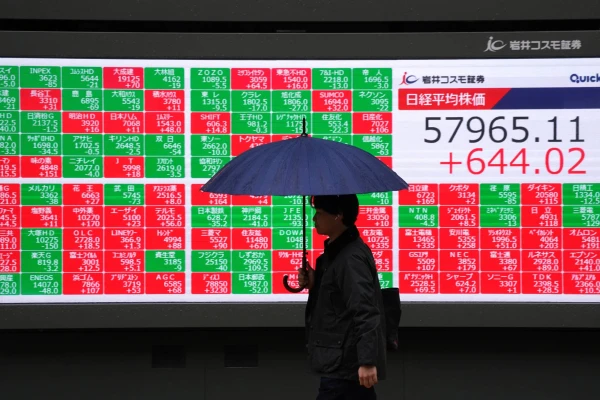
Asian equities swung between gains and losses on Wednesday, while oil prices edged higher as negotiations to end the conflict with Iran appeared to stall, with the strategic Strait of Hormuz remaining closed to shipping.
The White House confirmed that U.S. President Donald Trump and his team were reviewing Tehran's latest proposal to restore traffic through the vital waterway, but reports from CNN and the Wall Street Journal indicated the president remained skeptical.
Iran submitted a plan this week that would reportedly ease its chokehold on the strait in exchange for Washington lifting its retaliatory blockade on Iranian ports, as broader discussions continued over Tehran's nuclear program.
U.S. Secretary of State Marco Rubio described Iran's proposal as "better than what we thought they were going to submit," but stressed that any final agreement must "definitively prevent them from sprinting towards a nuclear weapon."
Iranian defense ministry spokesman Reza Talaei-Nik countered that Washington "must abandon its illegal and irrational demands," adding that the United States was "no longer in a position to dictate its policy to independent nations."
Qatar warned of the risk of a "frozen conflict" if a permanent resolution fails to materialize.
Concerns over the stalled peace efforts have driven crude prices higher for over a week. Trump's decision to cancel his envoys' planned trip for peace talks in Pakistan last weekend further dampened sentiment.
Brent crude traded above $112 per barrel, surpassing levels seen before the two sides announced a ceasefire in early April. West Texas Intermediate broke through $100 on Tuesday for the first time in two weeks, and both contracts posted slight gains on Wednesday.
"Iran wants the blockade lifted and access to its flows restored," wrote Stephen Innes of SPI Asset Management. "Washington holds that lever and is in no hurry to give it away without extracting value. Meanwhile, the longer this drags on, the more second-order effects start to bite. Storage pressure builds, production risks emerge, and the system begins to strain in ways that futures prices cannot ignore."
Markets showed little reaction to news that the United Arab Emirates, a key oil producer, decided on Friday to withdraw from OPEC and OPEC+, calling it a strategic decision.
Despite the grim headlines, CNN cited sources familiar with the mediation as saying the two sides were not as far apart as they appeared. Intense diplomacy continued, with talks focused on a phased approach: the first stage aimed at restoring pre-war conditions and reopening the Strait of Hormuz, while Iran's nuclear program would be addressed later.