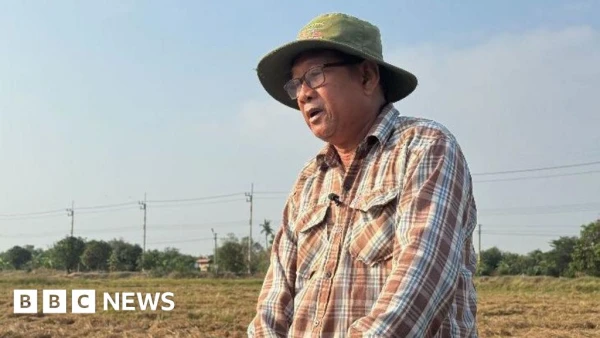
As planting season begins across Southeast Asia, farmers face a stark reality: fertilizers are scarce and prices have skyrocketed. The crisis stems from the closure of the Strait of Hormuz after US and Israeli strikes on Iran, which disrupted global fertilizer trade, and a subsequent Chinese export ban on key fertilizers.
Suchart Piamsomboon, a 60-year-old rice farmer in Thailand's Chachoengsao province, decided not to plant this season after fertilizer prices jumped from 800-900 baht per sack to over 1,100 baht, with warnings of further increases. "Farming only leads to financial losses," he said.
China, the world's largest fertilizer producer, halted exports of several types in March, adding to restrictions since 2021. Between 50% and 80% of its fertilizer exports are now restricted, according to Reuters analysis. A Shandong exporter described being told to stop shipments despite existing contracts with countries like Thailand, Indonesia, and New Zealand.
Southeast Asia is heavily dependent on Chinese fertilizer. Vietnam imported over 480,000 tonnes from China in Q1 2026, over half its total. The Philippines relies on China for 75% of its fertilizer and on Vietnam for 80% of its rice imports. Thailand sourced one-fifth from China and 32% from the Gulf in 2024.
Experts warn the impact will hit harvests later this year. Joseph Glauber of IFPRI said the combined effect of the Strait closure and China's ban will rattle global food security. The UN World Food Programme estimates 45 million more people could face acute hunger in 2026, with Asia and the Pacific seeing a 24% rise in food insecurity.
For now, farmers across the region are making the same grim calculation: plant without fertilizer or abandon the season. The decisions made in the coming weeks will determine the size of the world's rice harvest.