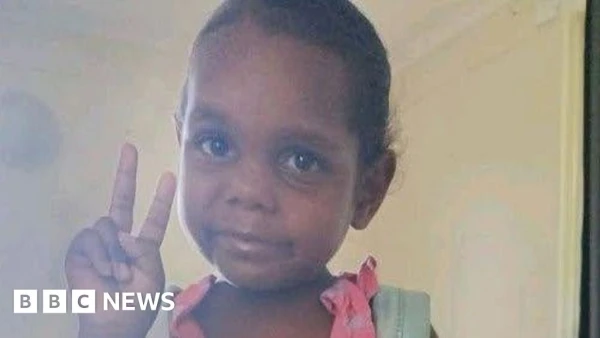
Police in Australia's Northern Territory say they have found the body of a five-year-old girl who was allegedly abducted from her home in the Outback, and are searching for a suspect they believe murdered her.
The girl, identified only as Kumanjayi Little Baby for cultural reasons, was last seen on Saturday when she was put to bed at an Aboriginal town camp near Alice Springs just before midnight.
On Thursday, police located the body of a child and are conducting forensic testing to confirm her identity and cause of death.
Investigators have been scouring the nearby bush and desert for Jefferson Lewis, 47, who was released from prison six days before Kumanjayi Little Baby disappeared and is believed to have fled around the same time.
"We believed he has murdered this child," investigation lead Peter Malley told reporters. "I say to Jefferson Lewis: we're coming for you."
A pair of children's underwear found near the camp contained DNA of both the little girl, who is non-verbal, and Lewis, Malley added.
Lewis, a distant relative according to local media, has a history of domestic and family violence offenses. He was seen holding hands with the child late on the night she disappeared, less than a week after his release.
In a statement, Kumanjayi Little Baby's mother expressed her grief: "It is going to be so hard to live the rest of our lives without you. We know you are in heaven with the rest of the family and Jesus. Me and your brother will meet you one day."
She also thanked the dozens of police and volunteers who searched around Old Timers Camp, a government site for Aboriginal people in Alice Springs.
"Around 200 people have worked tirelessly around the clock in searching for this beautiful little girl," Chief Minister Lia Finocchiaro said. "This is the worst possible outcome."
Detectives believe Lewis, who has no phone, bank account, or car, has been assisted and urged anyone with information to contact authorities. His lack of digital footprint has complicated the manhunt.
"We're knocking on doors, we're going through houses. It's going back to 1930s policing," Malley said on Wednesday.
Note: Using the name, image, or voice of deceased individuals breaches cultural protocols in many Aboriginal and Torres Strait Islander communities and requires family permission.