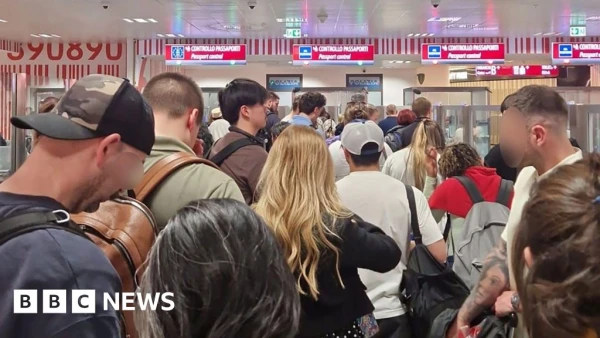
A Ryanair flight departing from Milan Bergamo to Manchester last week left passengers stranded after extensive delays at passport control, with the airline confirming the incident was caused by border processing issues.
"Due to passport control delays at Milan Bergamo Airport on 16 April, a number of passengers missed this flight from Milan to Manchester," Ryanair stated.
The disruption has been attributed to the European Union's new Entry-Exit System (EES), which requires non-EU citizens to register biometric data including facial scans and fingerprints when crossing Schengen Area borders. While the system was intended to be fully operational by April 10th, its implementation has created significant bottlenecks at certain airports.
Passenger accounts describe scenes of confusion and frustration. Adam Hassanjee, an 18-year-old from Bolton, reported waiting for over 90 minutes without movement before watching his plane depart.
"We were waiting for an hour and a half and weren't moving," Hassanjee told reporters. "Then we see the plane leave and got told we have to go and book our own flight back."
He estimated approximately 80 travelers from multiple flights were stuck in the same queue, describing the situation as "complete chaos" with poor organization and unhelpful staff. With no same-day alternatives available, Hassanjee had to arrange a complicated return journey through Malta to Leeds.
This incident follows a similar occurrence earlier in April when EasyJet passengers were left behind at Milan's Linate airport, also bound for Manchester. Another traveler, Peter Walker, missed his Ryanair flight from Tenerife South to East Midlands Airport along with approximately 70 other passengers, primarily young families.
Walker, a teacher who needed to return for work, faced additional flights costing £1,600 since the next available Ryanair option wasn't for another week. He reported receiving no communication or support from the airline regarding alternative arrangements.
While the European Commission maintains that the EES system is "working very well" in most member states, it acknowledged "technical issues have been detected in a few member states" during the initial implementation phase. The commission emphasized the system's security benefits, noting over 56 million border crossings have been registered since October, with 28,500 individuals denied entry including 700 identified security threats.
Affected passengers face additional challenges as many travel insurance policies don't cover such border-related delays, leaving them to pursue compensation through other channels like Citizens Advice.