Opinion | Britain’s Post-Liberal Disorder - The New York Times
Skip to contentSkip to site indexSearch & Section Navigation Section Navigation
Search
Tuesday, May 12, 2026
Opinion|Britain’s Post-Liberal Disorder
https://www.nytimes.com/2026/05/12/opinion/uk-elections-post-liberalism.html
-
Share full article
-
0
Advertisement
Britain’s Post-Liberal Disorder
May 12, 2026, 8:00 p.m. ET
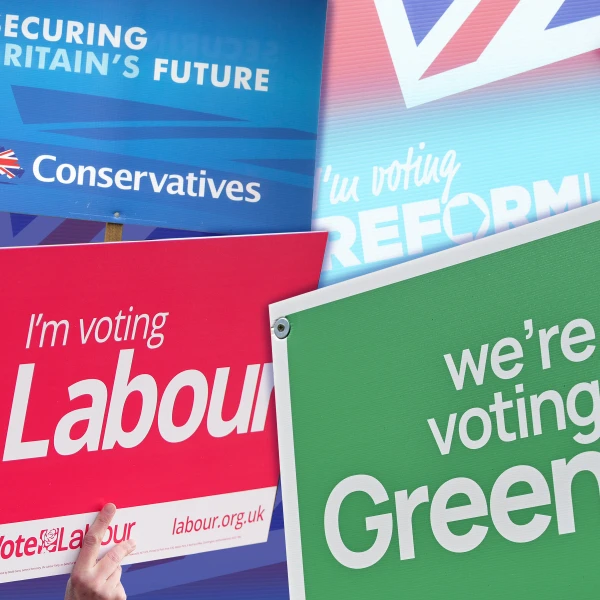
Credit...Photo illustration by The New York Times; source images by Christopher Furlong, Danny Lawson PA Images, John Keeble, and Matt Cardy, via Getty Images
-
Share full article
-
0
By Ross Douthat
Opinion Columnist
A month ago, the defeat of Viktor Orban’s Fidesz Party in Hungary prompted a round of hopeful liberal commentary about a possible ebb tide for populism and nationalism. Orban’s government had self-consciously sought to nurture a “post-liberal” intelligentsia, and there was a particular enthusiasm for the idea that its defeat could roll back the post-liberal impulse across the Western world, simply by depriving its would-be mouthpieces of junkets and stipends and academic conferences.
I wrote skeptically about that thesis just after the election, but now I want to offer a specific case study in why the post-liberal era isn’t about to be rolled back: the latest round of council elections in Britain, in which the government of Keir Starmer, an embodiment of centrist liberalism, suffered an expected but still catastrophic defeat.
One obvious headline from the election is the continuing success of the Reform Party, the populist start-up led by Nigel Farage. Reform is now more popular than either Starmer’s Labour or the floundering Tories, and Farage stands an excellent chance of becoming prime minister after the next national election. Since it’s also possible that the leader of the populist National Rally in France, Jordan Bardella, will claim that country’s presidency in 2027, there’s a plausible future where the West after Donald Trump features nationalists in power in both London and Paris, regardless of what happens in Washington.
But the resilience of nationalist politics, the extent to which what used to be called the “far right” simply is the mainstream right in Western democracies, isn’t the story that I want to emphasize. What we should be talking about when we talk about post-liberalism isn’t the resilience of a specific ideology but rather the persistence of a general political situation — a set of conditions that obtains regardless of whether Orban or Trump or Farage holds power, a crisis of Western governance that exists independently of populist think-tankery or reactionary blueprints.
Advertisement
You can see this crisis in Britain by looking not just at Reform’s council pickups but also at the broad context of those victories: A totally fragmented electoral landscape in which nobody, Reform included, is close to an impressive plurality of the vote. A radicalization among younger progressives that has made the Green Party the natural party of the left. The success of nationalist parties in Wales as well as in Scotland, and the rise of a specifically English nationalism as a novel right-wing force. The rise of ethnic and sectarian candidates who are winning the votes of Muslim immigrants in British cities, often campaigning on Gaza rather than local issues. The increasing threat of ethno-religious conflict, manifest not just in native-immigrant divides but also in rising antisemitism and tension between different immigrant groups (Hindu and Muslim, especially).
This toxic landscapeis the post-liberal situation. It’s a crisis of normal politics brought on by three great forces: the rapid aging and low birthrates of developed economies, the turn to mass immigration as a demographic solution that brings various racial and religious tensions in its train, and the internet as a source not just of radicalization but also of doomerism and paralysis and an insta-disillusionment with political leaders. (All this with the effects of artificial intelligence pending and uncertain.)
Subscribe to The Times to read as many articles as you like.
Ross Douthat has been an Opinion columnist for The Times since 2009. He is also the host of the Opinion podcast “Interesting Times.” He is the author, most recently, of “Believe: Why Everyone Should Be Religious.” @DouthatNYT•Facebook
Add a comment
-
Share full article
-
0
Related Content
Advertisement
Site Index
Site Information Navigation
To leave without signing in, use your browser's Back button.
Enjoy unlimited access to all of The Times.