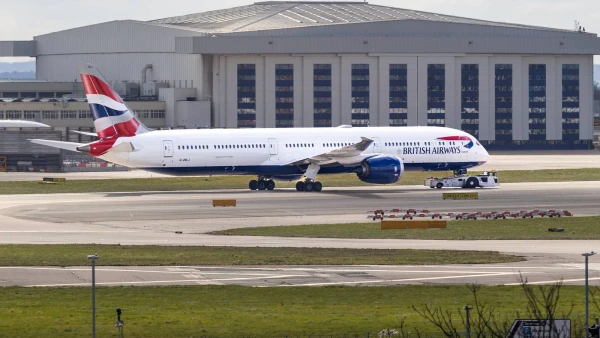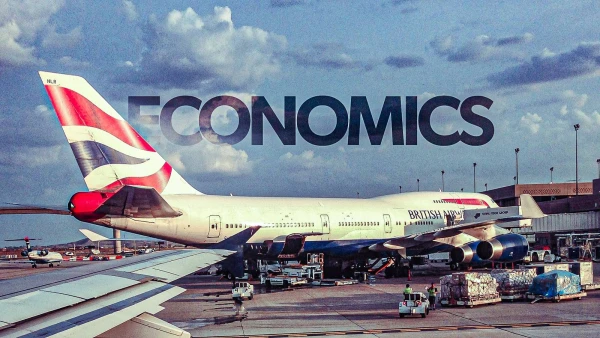
British Airways has completed its historic transition away from the Boeing 747-400, a quadjet that once defined the airline’s global operations and carried the British flag to destinations worldwide. The final 747-400s were retired during the COVID-19 pandemic, marking the end of an era for the iconic "Queen of the Skies."
Once the world’s largest operator of the 747-400, British Airways once flew 57 of the aircraft, deploying them on routes from London to New York, Los Angeles, and beyond. The fleet was divided into two distinct cabin configurations: one premium-heavy layout with 337 seats and another with 275 seats, prioritizing business and economy class. By the time the pandemic forced an accelerated retirement, most of the remaining 747-400s featured the higher-capacity layout.
The carrier’s shift away from the 747-400 was driven by a strategic pivot toward more fuel-efficient, twin-engine aircraft. "The 747-400 was a technological marvel when it debuted in 1989, but its operating costs and size made it increasingly unsustainable in today’s market," said an industry analyst familiar with the transition. "British Airways needed aircraft that could deliver similar capacity with lower fuel burn and maintenance expenses."
To replace the 747-400, British Airways turned to a trio of modern twinjets, each tailored to specific operational needs. The Airbus A350-1000, with its exceptional fuel efficiency and long range, became the workhorse for high-demand routes to destinations like São Paulo and Hong Kong. The A350-1000’s ability to carry meaningful payload over long distances while maintaining premium cabin offerings made it an ideal successor for the denser 747-400 configurations.
For routes requiring even greater capacity, British Airways deployed the Airbus A380, a four-engine behemoth that could seat up to 525 passengers in a multi-class layout. The A380 was particularly effective on high-demand routes such as Los Angeles, San Francisco, and Johannesburg, where passenger volumes justified its size.
The Boeing 777-300ER filled the premium-heavy gap left by the 747-400’s retirement. With eight First-class seats, 76 Club Suites, and 172 economy seats, the 777-300ER offered a more streamlined alternative to the 747-400’s sprawling cabin. British Airways ordered 16 of these aircraft, each designed to maximize revenue on business-centric routes.
The final piece of British Airways’ 747-400 replacement strategy was the Boeing 777-9, originally slated to enter service in 2020. Delays pushed its introduction to at least 2027, leaving a temporary gap in the airline’s fleet modernization plans. "The 777-9 was supposed to be the ultimate replacement, but supply chain challenges and certification delays have forced British Airways to rely on the A350-1000 and 777-300ER in the interim," explained a spokesperson for the airline.
The 747-400’s retirement wasn’t just about cost savings—it reflected a broader industry trend toward twin-engine aircraft, which offer superior fuel efficiency and lower maintenance costs compared to their four-engine predecessors. "The economics of operating a quadjet simply don’t pencil out anymore," said a former Boeing executive. "Airlines are prioritizing flexibility, range, and efficiency, and the 747-400 couldn’t compete on those fronts."
British Airways’ transition also highlights the evolving role of the hub airport. London Heathrow’s slot constraints and high operating costs made the 747-400’s size and fuel burn increasingly problematic. The A350-1000 and 777-300ER, with their lower operating costs and higher efficiency, allow the airline to maximize revenue per flight while minimizing environmental impact.
As British Airways closes the chapter on the 747-400, the airline’s fleet now consists of a mix of modern twinjets, each optimized for specific missions. The A350-1000 handles long-haul routes with premium demand, the A380 serves high-capacity corridors, and the 777-300ER bridges the gap for business-heavy routes. The delayed 777-9, when it finally arrives, will complete the transformation, offering even greater efficiency and range.
"The 747-400 was a symbol of aviation’s golden age," said a British Airways pilot with decades of experience flying the type. "But the future belongs to aircraft that can adapt to the challenges of the 21st century—efficiency, sustainability, and flexibility. British Airways has made the right choice."