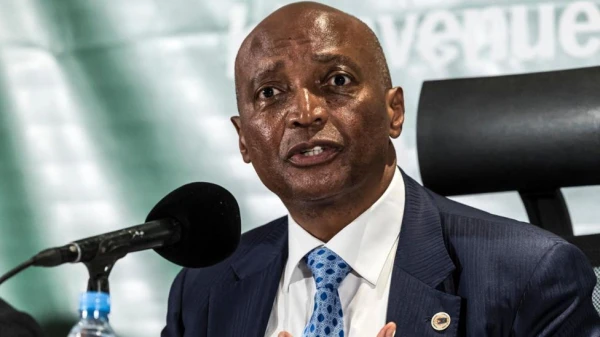
Confederation of African Football (CAF) President Patrice Motsepe has publicly declared his willingness to support any investigation into corruption within the organization, stating he would "encourage" such scrutiny.
Motsepe's comments come amid heightened tensions following CAF's controversial decision to strip Senegal of the 2025 Africa Cup of Nations title and award it to Morocco. The move has prompted Senegal's government to demand an investigation into potential corruption at the football governing body.
"I welcome any investigation into corruption at CAF, whether it is by a government or an authority or anybody," Motsepe said during a news conference in Dakar, Senegal. "Because any corruption in CAF we want to know about it and we will take action ourselves, immediately."
The CAF appeals board ruled that Senegal forfeited the Afcon final after several players walked off the pitch in protest of a penalty awarded to Morocco during stoppage time. The match, which Senegal initially won 1-0 after extra time, has now been overturned, with Morocco declared champions.
Motsepe emphasized his zero-tolerance stance on corruption, describing it as "worse than Covid and cancer." He added, "Whilst I am president of CAF we will never conceal any corruption. It is the biggest problem, not just in football."
The CAF president, who was re-elected for a second four-year term last March, stressed the importance of setting a positive example for African youth. "We can't set a bad example in football, to give our children the perception that if you want to succeed in life, be corrupt," he stated.
Regarding the ongoing dispute between Senegal and Morocco, which is now before the Court of Arbitration for Sport (CAS), Motsepe maintained that CAF would respect whatever decision the court reaches. "There is nothing I can tell you that I haven't said already 10, 15, 20 times," he told BBC Afrique, reiterating his commitment to implementing CAS's ruling.
Motsepe's visit to Senegal included meetings with President Bassirou Diomaye Faye and officials from the country's football federation, as African football faces one of its most significant governance challenges in recent years.