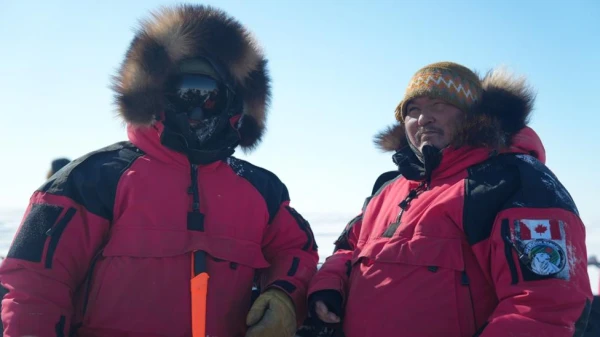
A simple row of spruce trees marked the finish line in Churchill, Manitoba, as Canadian Rangers completed a grueling 5,200-kilometer journey across the Arctic—the largest northern mission in their history. The patrol, which followed a route not attempted in 80 years, represents Canada's intensified focus on its vast northern territories amid growing geopolitical competition and climate challenges.
For 52 days, reservists and combat members navigated some of Earth's harshest conditions, driving snowmobiles across ice-covered terrain through blizzards and temperatures plunging to -60°C. They camped on frozen shores, wary of polar bears and frostbite, while the northern lights danced overhead.
"We would've failed without them," said Lt Col Travis Hanes, highlighting the indispensable role of Indigenous Inuit Rangers whose traditional knowledge guided the patrol through treacherous conditions.
The mission involved 1,300 military personnel conducting land surveys, climate change research, and testing Arctic survival capabilities in a region comprising 40% of Canada's landmass. This comes amid increased international attention on Arctic resources as warming temperatures open new passageways.
Brig Gen Daniel Rivière, commander of Operation Nanook-Nunalivut, emphasized the mission prepares Canada for "the worst case scenario," noting Russia remains "a formidable force" in the Arctic despite its war in Ukraine. While recent geopolitical tensions have raised concerns, Rivière stated cooperation with allies continues unaffected.
Climate change presented dual challenges: unusually cold temperatures created new frozen passages while warmer conditions caused hazardous ice instability. "Rivers that are normally completely frozen have overflowed where they hadn't historically," Hanes observed.
Inuit Rangers shared traditional "country food" like dried caribou and Arctic char, provided fur-lined gear, and guided the patrol through remote communities. Julia Elanik, an Inuk ranger from Aklavik, carried a rifle throughout the journey for polar bear protection.
Barnie Aggark, a Ranger since 1999 who guided the final 500km, expressed his commitment: "We have to let the rest of the world know that we are here, and this is our home, and we are going to protect it with everything that we have."
The patrol received air support from Canadian Air Force planes surveying terrain ahead, demonstrating the military's integrated approach to northern operations. As Arctic waters become increasingly navigable, Canada's Rangers stand as both traditional guardians and modern sentinels of the North.