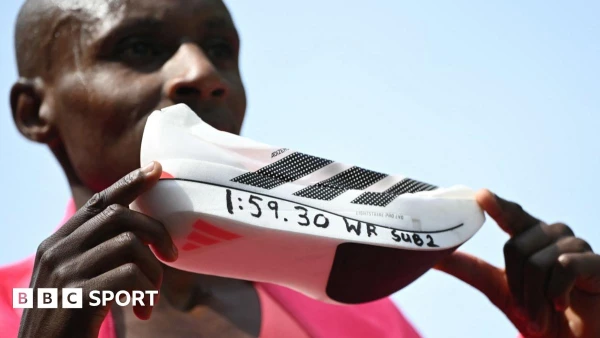
World Athletics president Sebastian Coe has assured that the governing body will not "strangle innovation" despite the controversy surrounding advanced footwear that helped Sebastian Sawe become the first competitive marathon runner to break the two-hour barrier.
The 31-year-old Kenyan won Sunday's London Marathon in 1 hour, 59 minutes, and 30 seconds, shattering a milestone once thought impossible. Sawe, along with Ethiopia's Yomif Kejelcha (who also ran under two hours) and women's winner Tigst Assefa, wore the Adidas Adizero Adios Pro Evo 3—a shoe weighing under 100 grams that Adidas claims improves running economy by 1.6%.
"I don't think any society, any civilisation, any sector of the economy has been served well if you try to strangle innovation," Coe told BBC Sport Africa during a visit to Botswana before the World Relays. "The role of World Athletics is very clear—we want to enable, but we also have a regulatory responsibility."
While acknowledging the role of technology, Coe emphasized that athletic performance hinges on multiple factors. "Shoes play a part, but not the biggest part. The biggest part is the mentality of the athlete, the physicality of the athlete, the world-class coaching, the world-class programmes that are now being run through federations to support their athletes."
Sawe attributed his dramatic improvement to rigorous training—running about 200km per week at altitude—and advanced nutrition, consuming 115g of carbohydrates per hour during the race after a breakfast of two slices of bread with honey and tea.
The rise of "super shoes" over the past decade has prompted World Athletics to introduce regulations on sole thickness, carbon-fibre plate design, and commercial availability to prevent excessive technological advantage. Coe noted that these rules may evolve as innovation continues.
"This is inevitably an evolutionary process," he said.