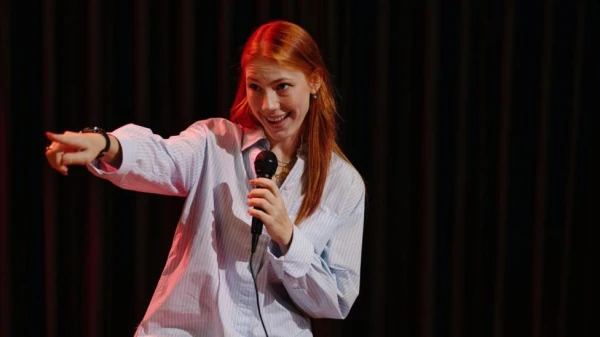
Britain's comedy industry is warning that without increased government support and formal recognition as an art form, the next generation of comedic talent may never get their chance to shine.
While the UK is globally renowned for its comedy, from blockbuster arena tours to beloved sitcoms, industry leaders argue that grassroots venues and emerging artists are being left behind. A recent meeting between top comedy figures and Culture Minister Ian Murray highlighted the sector's urgent need for structural support.
"Comedy should be recognized as an important cultural entity, from grassroots clubs to BBC sitcoms," said comedian Tom Walker, known for his Jonathan Pie character. "Every stand-up comedian is essentially a small business entrepreneur, and that deserves acknowledgment and reward."
Comedian Ro Dodgson emphasized the financial risks involved in comedy development. "Comedy is often based on risk," Dodgson explained. "When clubs and promoters struggle financially, they become less able to take chances on new acts. If the government provided funding as a form of insurance to support emerging talent, we'd have an industry that could sustain itself."
Carly Smallman pointed out the disparity between comedy and other creative sectors. "The support that music and theatre receive isn't available to comedy because many decision-makers don't recognize it as a legitimate art form," she said. "But it clearly is a significant industry that has largely had to fend for itself."
"If we don't get this right, we may lose the next generation of comedy voices." - Rupert Majendie, Baby Cow Productions
Production companies are also calling for systemic changes. Rupert Majendie, chief creative officer at Baby Cow Productions (behind hits like Gavin and Stacey and Alan Partridge), stressed the need for government commitment to protect the comedy ecosystem. "We need strong public service broadcasters, the right production incentives, and conditions that allow independent producers to keep backing new talent," Majendie said.
Tech entrepreneur Lu Jackson, founder of the Comedy Representation & Artform Trust (Craft), highlighted the economic oversight. "Comedy generates billions in revenue and millions in tax, yet it's completely omitted from policy structures," Jackson noted. "This means the sector isn't receiving proportionate reinvestment."
Labour MP Dr Simon Opher drew parallels with the music industry, suggesting comedy could adopt similar support mechanisms. "The structure mirrors music—big stars earn substantial incomes while emerging artists perform to small crowds for little or no pay," Opher observed. He proposed comedy could "mimic" initiatives like music's voluntary ticket levy, where larger venues reinvest in grassroots development.
Culture Minister Ian Murray expressed support for exploring government intervention opportunities. "I'm entirely behind working with comedy to better understand where government can help," Murray stated, encouraging the industry to consider implementing a voluntary ticket levy similar to music's model.
Arts Council England (ACE) maintains it already supports comedy, having awarded £12.23 million to comedy-related projects between 2010/11 and 2024/25. An ACE spokesperson said, "We are proud to support comedy, especially given its broad audience reach." However, ACE currently has no plans to change how it classifies funding, with comedy falling under broader categories rather than being recognized as a distinct art form.
The Department for Digital, Culture, Media and Sport confirmed it was "pleased" with the recent meeting and looks forward to continued engagement. As discussions progress, the comedy industry hopes for concrete steps that will secure its future and ensure Britain remains a global comedy powerhouse.