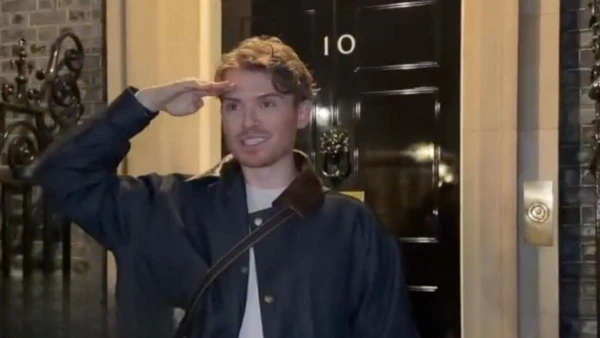
Conservative Party leader Kemi Badenoch has accused Prime Minister Andy Burnham of turning 10 Downing Street into a "personal studio" for crass social media stunts, following the removal of a viral video filmed outside the historic building.
The controversy erupted after influencer Max Balegde—who boasts 3.6 million TikTok followers—posted a video miming to explicit lyrics outside the prime minister’s official residence. The clip, which included profane Jamaican slang, was swiftly deleted from his social media accounts after backlash. Balegde had attended an event in Downing Street hosted by Burnham, designed to engage with digital creators and younger voters.
Badenoch condemned the incident as a "disgrace," arguing that the prime minister’s use of the symbolic entrance to Number 10—where world leaders like Ukraine’s Volodymyr Zelensky have been received—risks portraying the UK as a laughingstock on the global stage. "Vladimir Putin and President Xi will see these things," she warned at a press conference. "They will think our prime minister is not a serious man, and they will think we are not a serious country."
Burnham’s team defended the event, stating it was "right that the PM listens to" social media influencers who reach audiences beyond traditional media. A spokesperson for the prime minister acknowledged the video’s content was "clearly not acceptable" and praised Balegde for removing it, though they stopped short of confirming whether Downing Street had requested its deletion.
Critics, however, argue the episode highlights concerns over reduced scrutiny of the government’s communications strategy. Reform UK leader Nigel Farage also weighed in, calling the use of the Downing Street door "puerile" and "demeaning," though he stopped short of endorsing a ban on influencer access.
The event, which included a speech from Balegde, was part of Burnham’s broader push to leverage digital platforms for political outreach—a strategy pioneered under his predecessor, Sir Keir Starmer, but expanded significantly since July. Attendees confirmed they were provided with government-issued devices to record content, with footage later sent to them for posting.
As the fallout continues, the incident underscores the growing tensions between traditional governance and the unfiltered, viral nature of modern social media.