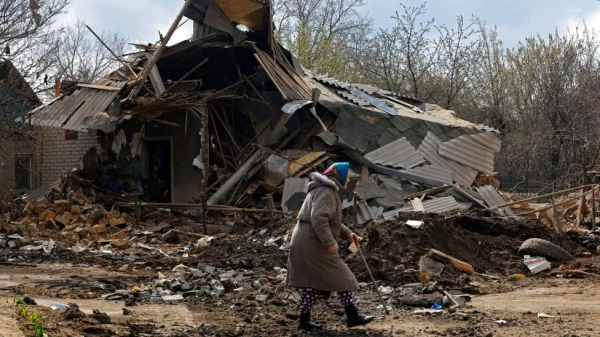
A temporary Orthodox Easter truce between Ukraine and Russia has been marred by thousands of alleged violations, with both sides accusing the other of breaching the fragile agreement within hours of its implementation.
Ukrainian military officials reported that Russian forces committed 2,299 violations since the ceasefire began on Saturday afternoon, including the shooting of four unarmed Ukrainian soldiers in the Kharkiv region. The local prosecutor's office described the incident as a "grave violation of international humanitarian law," while Ukraine's military labeled it "another war crime by Russia."
In response, Russia's defense ministry claimed Ukrainian forces were responsible for 1,971 violations, including three attempted counter-attacks in the Dnipropetrovsk region and four thwarted advances in Sumy and Donetsk.
Ukrainian President Volodymyr Zelensky had earlier stated his forces would respond "symmetrically" to any Russian attacks during the ceasefire period, expressing hope that the truce could be extended to facilitate stalled peace negotiations. However, Russia rejected any extension, declaring that military operations would resume on Monday.
Additional incidents reported during the ceasefire period include:
- A Russian drone strike on an ambulance in Ukraine's Sumy region, injuring three medical personnel.
- Nearly 2,000 drone strikes by Russian forces, though Ukraine noted no use of bombs or missiles.
- A prisoner exchange involving 175 prisoners of war from each side, including seven civilians.
The ceasefire, announced by Russian President Vladimir Putin earlier in the week, comes after previous resistance to Ukrainian calls for temporary pauses in fighting. While both sides agreed to the Easter truce, expectations among civilians and soldiers on the frontlines remained low.
Kyiv has consistently advocated for more comprehensive ceasefires as a potential first step toward ending the full-scale invasion that began in 2022. Moscow, however, has insisted on agreeing to a peace deal first, leading to accusations that Russia is not genuinely committed to ending hostilities.