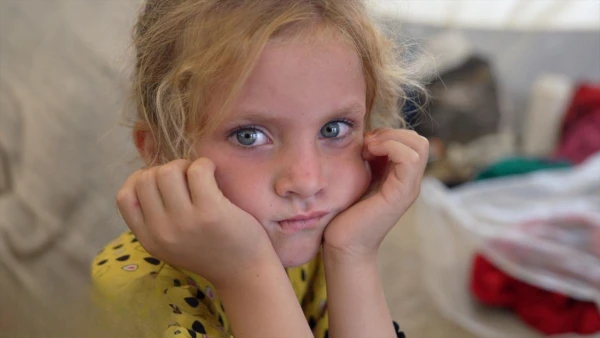
At the bustling Torkham border crossing, known to many as "Zero Point," the end of one grueling life marks the beginning of another. For 35-year-old Nazia, who just crossed over from Pakistan, the feeling of returning is profoundly bittersweet.
"It feels good to be in my own country. But I've never been to Afghanistan before and many people here don't even have enough bread to eat," she remarks, guiding her two children toward registration tents adorned with Taliban flags.
Nazia is just one face in an unprecedented mass exodus. In less than three years, an astonishing six million Afghans have been forced back across the borders from Pakistan and Iran. According to the UN Refugee Agency (UNHCR), another million have been deported this year alone, driven out by intense crackdowns on undocumented migrants and, increasingly, legally registered refugees.
"We've never seen in recent history a return movement on this scale," notes Charlie Goodlake, a spokesperson for the UNHCR in Afghanistan, describing the influx as a population the size of a small country.
For decades, millions of Afghans fled to neighboring nations to escape a revolving door of conflict, beginning with the Soviet invasion. Now, facing intense police harassment, political scapegoating, and forced evictions in their host countries, families are being uprooted once more. Pakistan has cited security and financial strains for its mass evictions, while human rights groups report late-night raids and unwarranted arrests. In Iran, deportations surged amid recent geopolitical tensions, with authorities allegedly branding some Afghan migrants as foreign spies.
Many returnees, like Nazia, were born in exile and have never set foot in Afghanistan. Others are seeing a homeland they fled decades ago. Sarwar, who left 45 years ago, returned in a crowded convoy with his seven brothers. While heartbroken to leave the only home they knew, he admits feeling a sense of relief to finally be free of continuous police harassment in Pakistan.
However, the Afghanistan they are returning to is buckling under a severe humanitarian crisis. Arriving families are greeted by desolate, heat-scorched transit camps hastily erected by aid agencies. The UN estimates that nearly half the country's population—21.9 million people—requires urgent assistance to survive this year, and UNICEF warns that one million children are facing life-threatening malnutrition.
Beyond crushing poverty, a shadow of fear looms over the returnees. Zarina, a 40-year-old mother sitting in a blistering 41-degree Celsius transit tent, points anxiously to a huddle of girls. Under Taliban rule, women and girls have been systematically erased from public life and barred from secondary schools and universities.
"Look at them, they're all girls. Of course I'm worried," Zarina says.
Others fear direct retribution. Despite the Taliban's sweeping amnesty for former government and security personnel, many remain in hiding. One former security guard, who was deported despite being registered with the UN, refuses to leave his safe house, citing former colleagues who have been killed since the 2021 takeover.
While Pakistan recently granted a temporary humanitarian exemption to 16,000 highly vulnerable Afghans, aid groups estimate up to 250,000 remain at serious risk of harm if deported.
In Kabul, the Taliban leadership is attempting to project resilience despite crippling international sanctions and severe global aid cuts. Foreign Minister Amir Khan Muttaqi acknowledges the immense pressure of the influx but insists the mass return will ultimately benefit the nation in the long run.
Yet, international observers remain skeptical that the regime can manage the crisis alone. As Goodlake points out, no nation could independently absorb such a massive demographic shock—especially when draconian Taliban edicts against women continue to severely restrict the flow of vital international support.