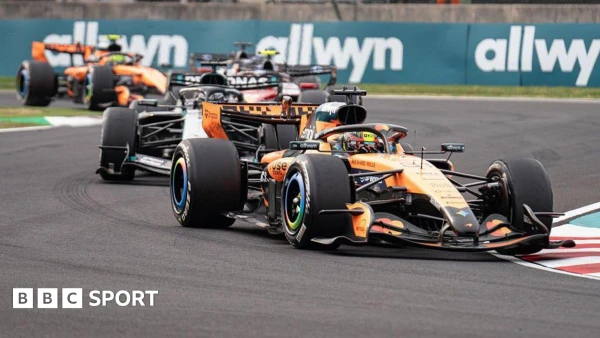
Formula 1 has swiftly enacted a series of targeted technical adjustments to its new-generation power units following widespread criticism from drivers, including reigning champion Max Verstappen, who argued the complex energy management was diluting the sport's pure racing essence.
The 2026 engine regulations, featuring a near-equal split between internal combustion and hybrid electrical power, had forced competitors into what many called "counter-intuitive" driving styles—such as lifting off the throttle prematurely on qualifying laps—to manage battery harvesting. This led to concerns that driver skill was being overshadowed by energy conservation.
Mercedes team principal Toto Wolff endorsed the revisions, stating, "We're acting with a scalpel, not a baseball bat. Our shared goal is to enhance the product, ensure out-and-out racing, and address safety where necessary." The changes, approved by the F1 Commission and pending final ratification, will debut at the upcoming Miami Grand Prix in early May.
Qualifying Overhaul: Pushing the Limits
Qualifying sessions will see significant modifications aimed at promoting flat-out driving. The permitted energy recharge per lap has been reduced from 8MJ to 7MJ, minimizing the time drivers spend harvesting. Additionally, the power recovery limit during full-throttle periods—known as "super-clipping"—has been raised to 350kW from 250kW. The FIA estimates these adjustments will limit super-clipping to just two to four seconds per qualifying lap, encouraging more aggressive, consistent performance.
Twelve circuits, particularly those with long straights and few corners where energy recovery is challenging, may apply even stricter energy limits to balance competition.
Race Safety: Curbing Dangerous Speed Gaps
Race-day changes focus on mitigating hazardous speed differentials, a factor in recent incidents like Oliver Bearman's high-speed crash in Japan. When cars operate with fully charged batteries versus depleted ones, the power disparity can reach 470 horsepower, creating unpredictable closing speeds.
New rules will cap the "boost" mode at 150kW or the car's current deployment level, whichever is higher. While drivers can access the full 350kW of electrical power in designated acceleration zones out of corners, deployment elsewhere on the track will be restricted to 250kW. This aims to reduce sudden speed variances while preserving overtaking opportunities.
Adapting to Adverse Conditions
Feedback from drivers has also prompted updates for wet-weather racing. Tire blanket temperatures will be increased to improve initial grip, and maximum electrical deployment will be reduced to limit torque and enhance car control in the rain. Rear light systems are being simplified to provide clearer visual cues, aiding drivers' reactions in poor visibility.
Revamping Race Starts
A trial program in Miami will test new start procedures to address difficulties caused by the revised engine architecture. Proposals include a low-power start detection system to identify cars with abnormally slow acceleration, triggering automatic deployment of the MGU-K hybrid unit to ensure a minimum acceleration level without conferring a sporting advantage. Additional visual warnings via flashing lights and adjustments to pre-race energy restrictions aim to prevent grid incidents, such as near-misses seen earlier this season.
These comprehensive revisions reflect F1's responsive approach to balancing innovation with the core principles of safety and competitive racing, as the sport navigates its new technological era.