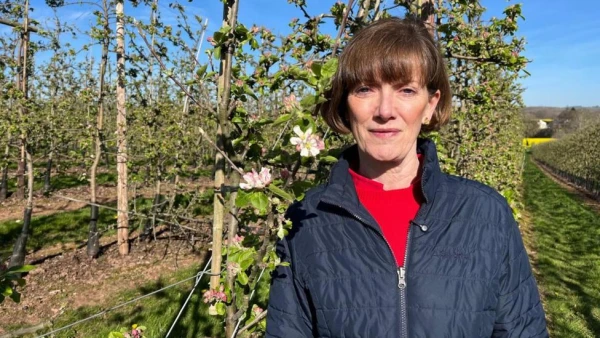
Fruit grower Ali Capper describes feeling "quite sick" upon learning of the outbreak of war in Iran, anticipating the severe repercussions for the UK's agricultural sector. With farmers in the midst of peak planting season, the conflict has triggered sharp increases in the prices of essential inputs like fuel and fertilizer, squeezing already tight margins.
Capper, who represents British apple and pear growers, notes that even if the recently announced two-week ceasefire leads to a swift resolution, the financial damage is already done for this growing cycle. "Sadly, even if it all ends tomorrow, the costs are baked in now," she explains, indicating that these increased expenses will inevitably be passed along the supply chain, potentially affecting consumer food prices.
New analysis from The Andersons Centre, an independent consultancy, reveals that inflation for farm operating costs in March was over 7% higher than the same period last year. The firm warns of a renewed "cost of farming squeeze," echoing pressures felt during previous geopolitical crises.
On her Worcestershire farm, Capper has seen specific costs skyrocket: fertilizer is up 40%, the red diesel used for tractors has doubled in price, and transport expenses have risen by approximately 20%. These spikes are largely driven by market disruptions; about a third of the world's fertilizer typically transits the Strait of Hormuz, which has been effectively blocked, while red diesel prices are tied to the soaring cost of Brent crude oil.
"We will have to pass this on," Capper states, adding that it will ultimately be up to the supermarkets she supplies to decide how much of these cost increases are reflected on store shelves.
She recalls the "brutal" impact of the Russia-Ukraine war, which led to a 30% rise in production costs across 2022 and 2023, pushing many farms to the brink. "We can't go there again. There's no flex in the system," she emphasizes.
The strain is felt across different agricultural sectors. Potato farmer Ben Savidge, based in Herefordshire, calculates that if red diesel prices remain elevated, his planting costs will increase by around £5 per tonne. Having locked in contracts with customers earlier this year, he is currently absorbing these extra costs but hopes to renegotiate given severely eroded margins.
"Last year we had an awfully dry summer which impacted yields drastically," Savidge says. "Now with our energy prices being hit like they have, it just feels like one thing after another." He remains committed to planting, however, and simply hopes "that it falls our way at the end."
Patrick Crehan, who manages fuel purchasing for a consortium of about 3,500 mainly agricultural members, reports that prices have nearly doubled in some cases, from around 70p per litre before the conflict to approximately 130p just before the ceasefire. While they have since retreated slightly, the hikes are unprecedented.
Crehan notes that some farmers are now reconsidering planting certain crops altogether, believing they may not recoup the steeply higher costs of cultivation. "I would describe it as busy, and difficult, and testing… the level of increases that we're witnessing, we just haven't seen them before," he told the BBC.
Despite the temporary ceasefire, industry analysts, including the Food and Drink Federation, predict that UK food inflation could still reach at least 9% by year's end, as the ripple effects of the conflict continue to work through the agricultural economy.