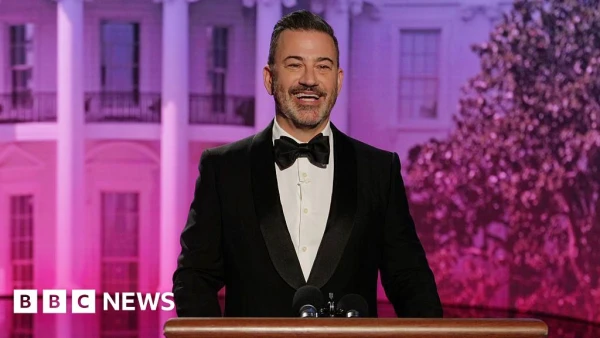
The U.S. Federal Communications Commission (FCC) has ordered an early review of Disney's television broadcast licenses, following President Donald Trump's call to fire late-night host Jimmy Kimmel. The controversy began after Kimmel joked that Melania Trump had the glow of an "expectant widow" days before a gunman opened fire at a gala attended by the Trumps.
In a Tuesday order, the FCC said it had been investigating Disney's ABC stations for possible violations, including unlawful discrimination. The directive requires Disney to file renewal applications for all its licensed TV stations within 30 days, even though the current licenses were not set to expire until 2028.
A Disney spokesperson stated that ABC and its stations operate within FCC guidelines, serving the public with trusted news and emergency information. The spokesman emphasized the stations' long record of compliance and commitment to local communities.
The review could potentially lead to license revocation, a rare action not taken in over 40 years. Democratic FCC Commissioner Anna M. Gomez called the move "a political stunt," arguing it is unprecedented and unlawful. She urged companies to challenge it, citing First Amendment protections.
White House Communications Director Steven Cheung said Kimmel should be "shunned for the rest of his life." Kimmel defended his joke on Monday, calling it a light roast about the age difference between Trump and Melania, and denied it was a call to assassination. Melania Trump accused Kimmel of deepening "the political sickness within America."
The incident occurred after a gunman, identified as Cole Tomas Allen, was tackled near a stairwell at the Washington Hilton, where the White House Correspondents' dinner was underway. He is charged with attempting to assassinate the president.
Legal experts view the FCC's early review as politically motivated. Jeffrey Schneider, a law professor at USC, noted that such reviews typically arise from technical or fraudulent issues. He deemed it highly unlikely Disney would lose its licenses, as the FCC must prove "intentional and repeated violations."
This is not the first time Kimmel has faced backlash. He was briefly taken off air in September after comments about the shooting of conservative influencer Charlie Kirk. The FCC, established in 1934, sets broadcasting rules on sponsorships, emergencies, and decency. Trump has previously suggested stripping licenses from networks that give him negative coverage.