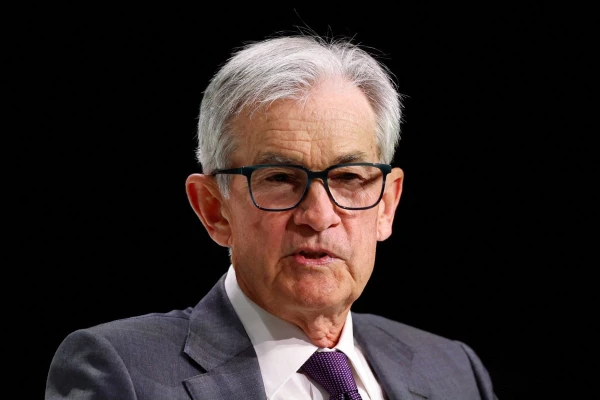
The US Federal Reserve is widely anticipated to keep interest rates unchanged at its upcoming policy meeting, as persistent energy price hikes and ongoing supply chain disruptions linked to the Middle East conflict continue to weigh on the economy. The two-day meeting, set to begin Tuesday, may be Chairman Jerome Powell's last before a potential transition of leadership.
Powell's presumed successor, Kevin Warsh—nominated by former President Donald Trump—has encountered a challenging confirmation process. Meanwhile, policymakers are grappling with conflicting pressures: surging fuel costs are driving inflation higher, even as concerns about the job market persist.
Fed officials are expected to maintain the benchmark rate in the range of 3.50% to 3.75%, extending the pause that has been in place since the start of the year.
"We still have a very high level of uncertainty on what's happening in the Middle East," said Kenneth Kim, senior economist at KPMG. He noted that while oil and gasoline prices may have peaked, "there's certainly an energy shock that's still impacting both consumers and businesses."
The Fed operates under a dual mandate to ensure price stability and maximum employment. Typically, it raises rates to curb inflation and lowers them to stimulate growth, but the current environment pulls policy in opposite directions.
Heather Long, chief economist at Navy Federal Credit Union, expects Powell to remain "non-committal" on the future path of rates, as the full economic impact of the conflict with Iran remains unclear.
The latest oil price spike followed US-Israeli strikes on Iran in late February, which prompted Tehran to effectively close the Strait of Hormuz—a critical chokepoint for global energy shipments.
Containing Inflation Takes Priority
Fed officials are likely to prioritize inflation control over labor market concerns at this meeting, as the war enters its ninth week. The Strait of Hormuz is also a vital route for fertilizer shipments, and disruptions there threaten global food production.
US consumer inflation hit 3.3% in March, its highest level in nearly two years, driven largely by soaring energy costs.
Fed Governor Christopher Waller, who had previously advocated for rate cuts to support employment, indicated earlier this month that a prolonged conflict could make it difficult for the central bank to reduce rates this year. He stated that if both high inflation and a weak labor market emerge, "one would have to balance risks on both sides," which "may mean maintaining the policy rate at the current target range if the risks to inflation outweigh those to the labor market."
Kim noted that recent solid hiring figures "give the Fed some cushion" to temporarily focus more on price stability.
Analysts will closely watch the Fed's post-meeting statement for any signals that rate hikes might be back on the table.
Political Pressure Mounts
The Fed's decisions come under intense political scrutiny. Trump has openly called for lower rates and frequently criticized Powell for not cutting them aggressively enough. Beyond verbal attacks, Trump has sought to remove Fed Governor Lisa Cook over allegations of mortgage fraud, a case now before the Supreme Court.
As the central bank navigates this critical juncture, the interplay between geopolitical shocks, inflationary pressures, and political interference will shape the course of US monetary policy.