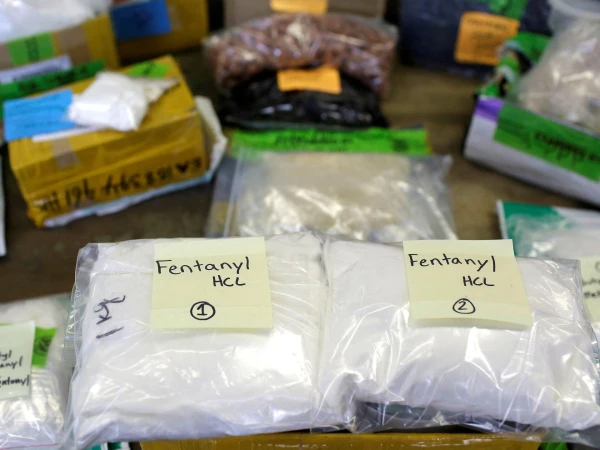
As the fentanyl epidemic continues to morph, public health officials warn that the United States remains dangerously unprepared to curb the synthetic opioid's deadly spread. Recent policy changes prioritizing law enforcement over treatment and prevention have jeopardized hard-won progress, leaving communities vulnerable to escalating overdose rates.
"We're still behind the eight ball," said Dr. Anya Sharma, an addiction specialist at the National Institute on Drug Abuse. "Fentanyl's potency and the speed at which new analogs emerge require a nimble, science-based response. Instead, we're seeing critical health programs scaled back just as the crisis enters a more complex phase."
Experts point to a troubling shift toward militarized strategies—including border security operations and heightened criminal penalties—that divert resources from evidence-based interventions like medication-assisted treatment and harm reduction services. This approach, they argue, fails to address the root causes of addiction and overlooks the role of domestic drug production.
"Cutting access to healthcare while doubling down on punitive measures is like using a bucket to bail out a sinking ship," noted Carlos Mendez, director of the Coalition for Safe Communities. "We need comprehensive solutions that prioritize saving lives, not just seizing drugs."
The consequences are already visible: overdose deaths involving fentanyl and its analogs have surged in recent months, particularly in regions with limited treatment infrastructure. Public health advocates urge a return to strategies proven to reduce harm, such as expanding access to naloxone, supporting syringe exchange programs, and investing in community-based recovery networks.
Without a coordinated national effort grounded in public health principles, experts caution that the U.S. will continue to lag in its response to an ever-evolving crisis—with fatal results for thousands of Americans.