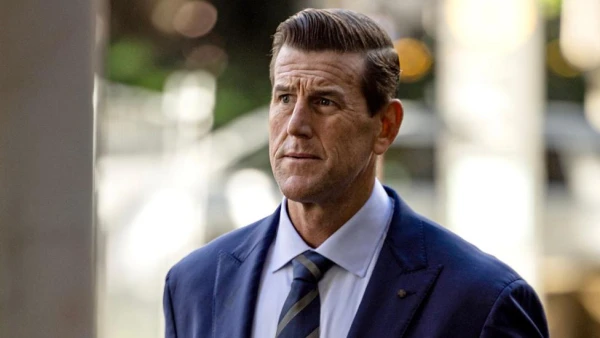
In a quiet but momentous scene at Sydney airport, Ben Roberts-Smith—once celebrated as Australia's most decorated living soldier—was escorted from a plane into police custody. The former Special Air Service corporal, recipient of the prestigious Victoria Cross, now faces five counts of war crime murder, marking an unprecedented chapter in Australian military and legal history.
Roberts-Smith's fall from national hero to criminal defendant follows a seven-year civil defamation battle that concluded with a Federal Court judge ruling allegations he killed four unarmed Afghan detainees were substantially true. While he maintains his innocence, calling the claims "egregious" and driven by jealous peers, the criminal charges elevate the stakes dramatically—conviction could mean life imprisonment.
Professor Donald Rothwell, an international law expert, observes: "For Roberts-Smith to now be charged with war crimes—and not just one, but multiple war crimes—is a very significant cultural and social moment for a country that has historically placed great store in the exploits of its defence forces."
An Unprecedented Prosecution
When Roberts-Smith returned from Afghanistan in 2013, he was hailed as a national icon, celebrated with speaking engagements, magazine covers, and even being named Father of the Year. His reputation began unraveling in 2018 when investigative reports alleged misconduct during his SAS service, including unlawful killings of prisoners.
Deane-Peter Baker, a special forces ethics scholar, notes the global significance: "We've never seen this before. If you expand the lens and consider recipients of equivalent awards in other countries, you would be very hard pressed to find one who has been charged with a war crime."
Why the Investigation Took Years
The charges culminate a five-year investigation by the Office of the Special Investigator (OSI), established after the 2020 Brereton Report found "credible evidence" that elite Australian soldiers unlawfully killed 39 people in Afghanistan. The OSI has faced extraordinary challenges investigating alleged murders committed 9,000 kilometers away in an active war zone.
Ross Barnett, OSI's investigations director, explains: "We can't go to that country, we don't have access to the crime scenes... we don't have photographs, site plans, measurements, the recovery of projectiles, blood spatter analysis... we don't have access to the deceased."
Compounding these difficulties is military culture's reluctance to testify against comrades. Peter Stanley, former principal historian at the Australian War Memorial, notes: "Potential witnesses who may otherwise have been silent have come around to the idea that their principal obligation is to the truth, and not to any friendships they may have."
Legal History in the Making
The prosecution faces numerous hurdles, from coordinating witnesses in Afghanistan to managing extensive evidence from five separate alleged incidents. Rothwell emphasizes: "We have no contemporary experience of war crimes trials being conducted in Australia. This is novel in terms of modern Australian legal history."
Finding an impartial jury presents another challenge, given extensive media coverage of Roberts-Smith's civil case. Rothwell predicts: "A trial is 'most definitely' years away," noting that former SAS soldier Oliver Schulz—charged with a single murder count in March 2023—won't face trial until next year.
As Australia confronts allegations challenging its military legacy, Roberts-Smith's case represents more than individual accountability—it symbolizes a nation grappling with the complex realities of modern warfare and the values it claims to uphold.