A severe shortage of cooking gas cylinders is triggering a mass exodus of migrant workers from India's major cities, as disruptions from Middle East conflicts ripple through global supply chains.
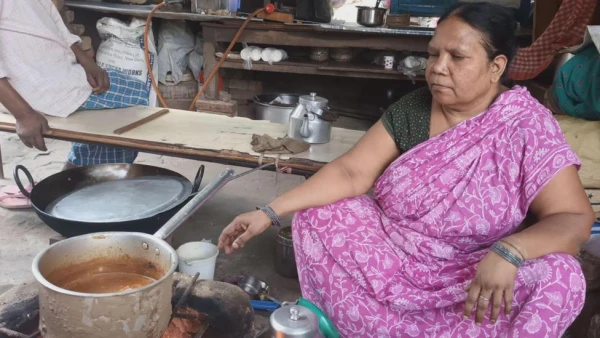
Every morning, Shakuntala Devi and Shakiba Bibi—neighbors in a Delhi slum—embark on a fruitless search for liquefied petroleum gas (LPG) cylinders, the primary cooking fuel for millions of Indian households. After three weeks of empty-handed returns, they face a stark choice: find gas or return to their rural villages.
"If this continues for a few more days, we'll have no gas left in our kitchens and will be forced to go back," Shakuntala told reporters.
The women, who work as domestic helpers earning approximately 15,000 rupees monthly, represent thousands of migrant families from Uttar Pradesh and Bihar who migrated to Delhi over the past decade. Their plight echoes across urban centers including Mumbai, Bengaluru, Chennai, and Hyderabad, where crowded railway stations and bus terminals signal a growing reverse migration.
Global shipping disruptions caused by Middle East tensions have severely strained India's LPG supplies. The country depends heavily on imports that transit through the Strait of Hormuz—a critical shipping lane now affected by regional conflicts. While some Indian vessels have recently received passage permissions, uncertainty persists with multiple ships awaiting clearance.
Government officials maintain there is no LPG shortage, citing increased domestic production and diversified imports from countries including the United States, Russia, and Australia. Authorities have urged citizens to avoid "panic ordering" and assured adequate stockpiles.
Yet migrant workers, who often rely on informal networks to access cooking gas, report mounting desperation. Interviews with nearly 30 Delhi migrants revealed widespread intentions to return to villages if conditions don't improve.
Ashok Yadav, who recently returned to his Uttar Pradesh village from Delhi, explained his decision: "There was no cooking gas available. Even local restaurants had closed. I struggled to eat two meals daily, so returning home became necessary."
The crisis has forced difficult adaptations. Sushila Devi, a Delhi tea shop owner, has resorted to firewood for both her business and home cooking.
"I haven't secured a gas cylinder in nearly four weeks," she said. "Firewood prices are skyrocketing, and it's not sustainable. If this continues, I'll have to return to my village too."
Her neighbor Pushpa Devi noted one silver lining: "At least we won't starve in our villages where we can share meals with relatives."
The shift toward more polluting fuels like firewood, kerosene, and coal raises environmental and health concerns, particularly in cramped urban dwellings where such alternatives pose safety risks.
Formal LPG access presents additional hurdles for migrant populations. Legal cylinder acquisition requires registered connections with identity and address documentation—documents often unavailable to informal sector workers who relocate frequently or lack landlord cooperation.
"Migrant workers move often and can't constantly update documents," explained Delhi trade unionist Rajesh Kumar. "Some landlords refuse address proofs, making formal urban documentation nearly impossible."
Many migrants traditionally relied on unregulated centers selling smaller, refillable cylinders. Since the crisis began, many such centers have closed while others charge exorbitant rates—up to four times normal prices for standard household cylinders.
"Most migrant workers with minimal earnings simply can't afford these prices," Kumar added.
Limited alternatives compound the problem. Shared electricity connections in slums can't support electric stoves, while safer models remain prohibitively expensive.
Economic analysts warn of broader consequences. Arvind Goel, co-chairman of the Confederation of Indian Industry's industrial relations committee, noted: "The situation remains manageable currently, but continued reverse migration could significantly impact micro, small, and medium enterprises, particularly in labor-intensive sectors like construction, textiles, and manufacturing."
India's 2011 census recorded 54 million inter-state migrants, though analysts believe actual numbers are substantially higher and have grown significantly since. The latest census, recently launched after long delays, may reveal updated figures.
For now, the uncertainty has already prompted drastic measures. Ramnaresh Yadav sold his autorickshaw two weeks before returning to his Bihar village—a decision echoed by countless others facing the cooking fuel crisis that threatens to reshape India's urban labor landscape.