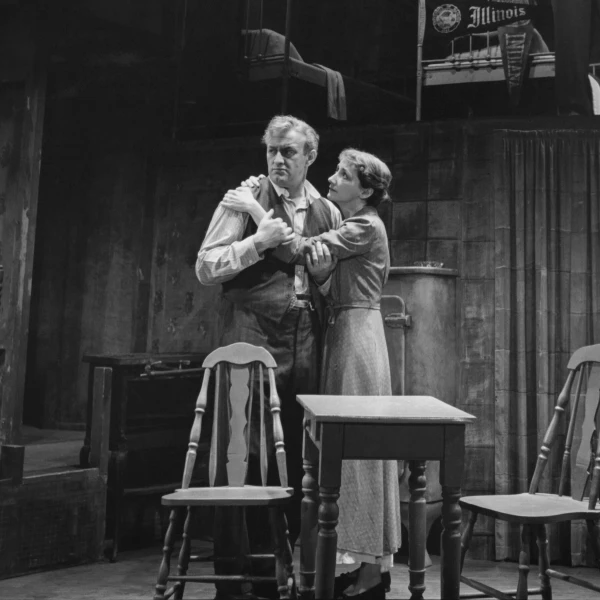
In response to Eric Alterman's essay on why American Jews still weep for Willy Loman, readers share their own emotional connections to Arthur Miller's classic play.
Mashey Bernstein of Santa Barbara, Calif., argues that the true power of "Death of a Salesman" lies in its ability to resonate differently with each generation. A young viewer may see their father's struggles, a middle-aged parent fears becoming Willy, and an older person reflects on their own fortune. Bernstein writes, "No other play, in my opinion, has this ability to be read differently by different generations at the same time."
Another reader contends that the play's emotional impact transcends religious identity. The struggle of salesmanship, as Miller depicted, is universal. The reader recalls his father's advice: "Son, whatever you do in life, you have to sell yourself." That understanding, he says, is why the play continues to move audiences of all backgrounds.