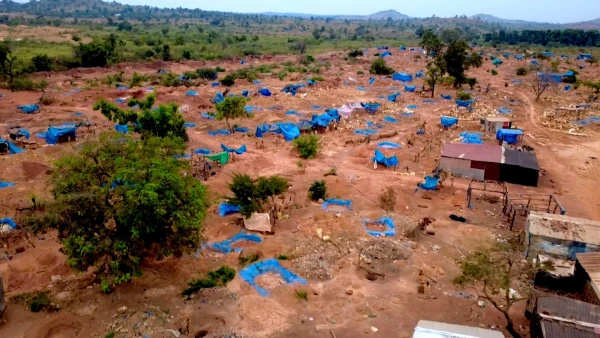
In the heart of West Africa, Guinea’s government has launched a sweeping crackdown on illegal gold mining operations, leaving thousands of rural families in dire straits. The move, aimed at curbing environmental damage and unregulated extraction, has inadvertently cut off a vital income source for communities that have long relied on artisanal mining to survive.
Local leaders and residents report that the sudden enforcement of mining bans has plunged villages into food insecurity, with families struggling to afford basic staples. "People are going hungry because the mines were our only source of income," said Amadou Diallo, a community elder in the mining town of Siguiri. "The government’s actions are well-intentioned, but they’ve left us with no alternatives."
The crackdown, spearheaded by Guinea’s Ministry of Mines and Geology, targets small-scale miners operating without licenses. Authorities argue that illegal mining exacerbates deforestation, river pollution, and soil degradation, posing long-term threats to the region’s ecosystem. However, critics warn that the enforcement lacks a safety net for displaced workers, many of whom lack formal education or other marketable skills.
"The government must provide support to these communities before enforcing such drastic measures," urged Fatoumata Bâ, a human rights activist based in Conakry. "Otherwise, we’re trading one crisis for another."
The mining sector is a cornerstone of Guinea’s economy, contributing significantly to its GDP. Yet, the informal nature of artisanal mining has long been a double-edged sword—providing livelihoods while fostering corruption and environmental harm. Now, as authorities tighten regulations, the human cost is becoming impossible to ignore.
For now, families in affected regions are left to grapple with the consequences, their futures hanging in the balance as the government weighs the urgency of environmental protection against the immediate needs of its people.