At least 14 people were killed and more than 38 wounded when an explosive device detonated on the Pan-American Highway in southwestern Colombia on Saturday, according to regional authorities.
Octavio Guzmán, governor of the Cauca region, reported the toll on social media, noting that five minors were among the injured. He condemned the attack as an "indiscriminate" assault on civilians and called for a "decisive, sustained" government response to what he described as a "terrorist escalation."
Video footage shared by Guzmán showed mangled vehicles and debris strewn across the highway, with emergency services attending the scene.
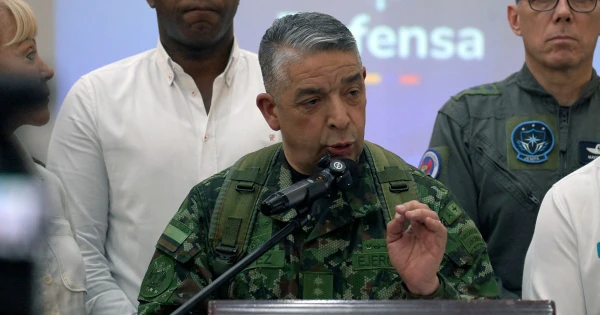
General Hugo López, commander of Colombia's Armed Forces, labeled the incident a "terrorist act" and blamed the network of a fugitive known as "Ivan Mordisco" and the Jaime Martínez faction—both dissident groups that splintered from the former Revolutionary Armed Forces of Colombia (FARC) after the 2016 peace deal.
President Gustavo Petro condemned the attack, calling the perpetrators "terrorists, fascists, and drug traffickers."
The bombing is part of a recent surge in violence. López reported at least 26 security incidents over the past two days in southwestern Colombia, including a shooting at a police station in Jamundi and an attack on a Civil Aviation radar facility in El Tambo, where authorities neutralized three explosives-laden drones. No casualties occurred in those incidents.
On Friday, two car bombs detonated near military units in Cali and Palmira, causing material damage but no injuries.
Defense Minister Pedro Sanchez, who was leading a high-level delegation meeting in Palmira at the time of the bombing, vowed a firm response. "These criminals seek to instil fear, but we will respond with firmness," he said on social media.
Francisca Toro, governor of Valle del Cauca, urged the national government to provide immediate support, calling for reinforced security forces, enhanced intelligence operations, and decisive action against what she termed a "terrorist-level escalation."
Cauca and Valle del Cauca are key areas for illegal armed groups involved in drug trafficking, as they control access routes to the port of Buenaventura, a major transit point for drugs bound for Central America and Europe.
The government has offered a $1 million reward for information leading to the capture of "Marlon," identified as a regional dissident leader. Local authorities also announced a $14,000 reward for tips on the perpetrators of the attacks in Cali and Palmira.
"Cauca cannot continue facing this barbarity alone," Guzmán said, noting that unspecified attacks also occurred in El Tambo, Caloto, Popayan, Guachene, Mercaderes, and Miranda.