Skip to main contentSkip to navigation
Close dialogue 1/1 Next image Previous image Toggle caption
Support the Guardian
Fund independent journalism
Support from $3.45 a weekSupport from $3.45 a week
US
The Guardian - Back to home The Guardian
- [x]
Show more Hide expanded menu
-
- News
-
- Opinion
-
- Sport
-
- Culture
-
- Lifestyle
-
Search input google-search Search
-
* [Search jobs](https://jobs.theguardian.com/) -
Search input google-search Search
- [x]
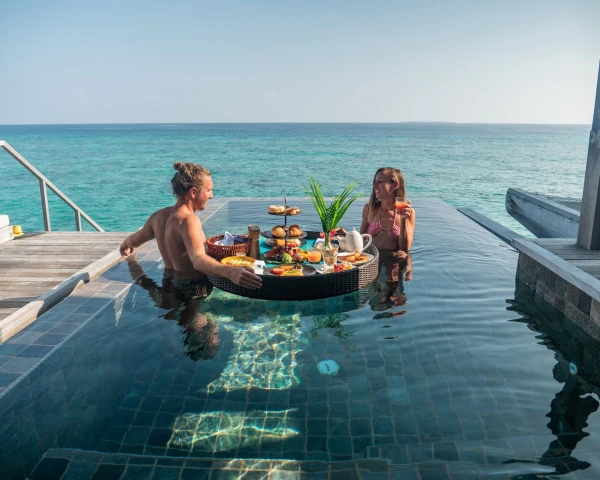
A luxury villa with an infinity pool. Consumers are being advised to look for independent reviews and check website links before booking trips. Photograph: Mystockimages/Getty Images
A luxury villa with an infinity pool. Consumers are being advised to look for independent reviews and check website links before booking trips. Photograph: Mystockimages/Getty Images
Holidaymakers warned over social media scams for fake accommodation
Research suggests travel scams are on rise as experts advise doing some detective work to make sure holidays are real
Mon 29 Jun 2026 03.00 EDT Last modified on Mon 29 Jun 2026 06.18 EDT
Share
Holidaymakers have been advised to carry out amateur detective work to ensure they do not book into fake accommodation this summer, as research showed a third of travellers had seen an increase in potential travel scams on social media.
Consumer experts have urged holidaymakers to do a reverse image search on photographs of holiday homes and check their locations on an online map to verify they are real.
People may be booking in a hurry this year as many have left it later than usual because of uncertainty around the impact of the Iran war, increasing the risk of falling victim to an online or telephone scam.
‘Your reservation is at risk’: beware the Booking.com scam Read more
Some of those caught up in flight cancellations and delays at the start of the Iran war have already been victims of scams.
As well as fake holiday accommodation or flights, people may also be offered tours that do not exist, while scammers sometimes copy photographs from legitimate websites and often ask for bank transfers.
George Ralchev, head of risk at payment service provider emerchantpay, which commissioned the research, said holidaymakers were being targeted by social media scammers “looking to take advantage of the peak travel season”.
Seven in 10 people said they were wary of promotional emails related to holidays because of potential scams, according to the survey carried out by Opinium in May among 2,000 people in the UK.
Two-fifths of holidaymakers said they changed their behaviour while on holiday because of financial safety concerns.
Half now prefer to book holidays with online or high street travel businesses if they clearly explain how they are protecting consumers from fraud.
One woman scammed out of £6,500 while trying to book a Greek holiday villa previously told the Guardian that she had begged her bank to halt the money transfer, only to be told by staff that there was nothing they could do.
To help avoid scams, people could do research to check that a destination actually exists, look for independent reviews and check website links, emerchantpay said.
Holidaymakers may also want to check whether the company involved is a member of Abta, a trade association for UK travel agents, tour operators and the wider travel industry.
People booking package deals with a flight could also check if they are covered under the Air Travel Organisers’ Licensing (Atol) financial protection scheme.
Lisa Webb, consumer law expert at the consumer group Which?, said the findings were “sadly unsurprising” and reflected its own research that social media firms were “failing to take meaningful action to tackle the flood of scams on their platforms”.
Lost your crypto access code? Be wary, there‘s a scam for that too Read more
Webb said: “The onus should not fall on consumers, but there are ways to help you spot fake holiday listings – such as using a reverse image search to check for stolen images or checking the property’s location on an online map to see that it exists.”
She advised travellers to book through trusted channels and avoid paying by bank transfer for anything advertised on social media. Anyone who thinks they have lost money to a holiday booking scam should contact their bank immediately and report it to Report Fraud or Police Scotland.
According to separate research from Which? undertaken in the summer of 2024 and spring 2025 on Booking.com reviews, hundreds of people complained that they had paid for accommodation that did not exist. Booking.com provided a detailed response at the time and said cybersecurity was a top priority. Expedia customers were also targeted in 2024.
Explore more on these topics
Share
Most viewed
- #### Two tickets for Wimbledon Centre Court? That’ll be £586,000 please
- #### Donald Trump hijacked America’s 250 and turned it into a ‘theatre of the absurd’
- #### Ex-Alaska mayor and ‘parent of the year’ charged with sexual abuse of minors
- #### A new start after 60: I spent eight years thinking I had Parkinson’s. Then doctors ‘de-diagnosed’ me
- #### Prince Harry and family’s UK visit ‘pulled from under their feet at 11th hour’
Related stories
Related stories
- ### ‘Remote purchase’ fraud in UK surges as customers tricked into disclosing passcodes 27 May 2025
- ### UK motorists warned of fake parking QR codes being used in ‘quishing’ scams 15 Aug 2024
- ### Chinese network behind one of world’s ‘largest online scams’ 8 May 2024
- ### Christmas shoppers warned over ‘missed delivery’ scams 18 Dec 202369 69 comments
- ### Holiday scams soar as Britons rush to book summer getaway 30 Apr 2022
- ### England’s traffic light system: what does it mean for holidaymakers? 9 Apr 2021
- ### Scammers can create fake business ads on Google 'within hours' 5 Jul 2020
- ### Christmas shoppers warned over safety as fake goods on rise 3 Dec 2018159 159 comments
More from Lifestyle
More from Lifestyle
- ### Having children makes you smarter? Incredible, but true 3h ago95 95 comments
- ### Is it true that … vitamin C serums provide added sun protection? 6h ago
- ### Trekking through a living mountain culture: Spain’s Picos de Europa 7h ago
- ### A new start after 60: I spent eight years thinking I had Parkinson’s. Then doctors ‘de-diagnosed’ me 8h ago
- ### How a Romford maternity ward was able to turn the tide after a ‘requires improvement’ rating 18h ago
- ### This $380 foldable kayak fits in my Prius and goes from backseat to lake in 10 minutes 20h ago
- ### ‘I eat pasta almost every day’: a day in the life of a world champion pizza athlete 21h ago
- ### Kindness of strangers: We were hopelessly lost in the Sudanese desert. Then villagers offered us a hut to stay in 22h ago
- ### Are there places on Earth where humans haven’t been? 1d ago90 90 comments
Most viewed
Most viewed
Most viewed Across the Guardian
-
Two tickets for Wimbledon Centre Court? That’ll be £586,000 please
-
Donald Trump hijacked America’s 250 and turned it into a ‘theatre of the absurd’
-
Ex-Alaska mayor and ‘parent of the year’ charged with sexual abuse of minors
-
A new start after 60: I spent eight years thinking I had Parkinson’s. Then doctors ‘de-diagnosed’ me
-
Prince Harry and family’s UK visit ‘pulled from under their feet at 11th hour’
-
Porn star turned late-night TV icon Robin Byrd: ‘Sex is a form of magic’
-
Trump renaming fiasco fuels jokes as Maher takes Kennedy Center’s Mark Twain prize
-
Trafficked, beaten and raped: raids reveal scale of abuse of women in Asia’s cyberscam centres
-
‘We’re up against forces that have all the money in the world’: Erin Brockovich on her battle against AI datacentres
-
Rolf Harris: Primetime Predator review – a deeply chilling look at a celebrity abuser
Most viewed in Money
-
‘Buy the haystack’: how tracker funds beat searching for shares
-
Holidaymakers warned over social media scams for fake accommodation
-
Job-dropping: why employees are turning down high-paying promotions
-
Developers want to build on top of my flat and there’s nothing I can do to stop it
-
Homes for sale near lidos, lakes and ponds in England and Scotland – in pictures
-
Lost your crypto access code? Be wary, there‘s a scam for that too
-
Who is behind the great rock’n’roll ripoff? How Ticketmaster swallowed the live entertainment scene
-
My eight-year-old was refused a UK passport
-
‘Your photos will be deleted’: Apple users warned over ‘nasty’ iCloud storage scam This article is more than 2 months old
-
HMRC announces 22% tax on cash interest held in stocks and shares Isas
Original reporting and incisive analysis, direct from the Guardian every morning
-
California resident – Do Not Sell or Share
Support the Guardian
Available for everyone, funded by readers
© 2026 Guardian News & Media Limited or its affiliated companies. All rights reserved.(dcr)