In the late 1980s, as China's economy began opening up, a high school dropout named Ding Shizhong traveled to Beijing with 600 pairs of shoes made in a relative's factory. The money he earned funded his first workshop, where he produced footwear for other companies. That teenager, then one of China's many new entrepreneurs, had bigger ambitions.
His business has since grown into Anta, a sportswear giant that owns international brands like Arc'teryx and Salomon, and recently bought a stake in Puma. Now Anta is challenging Nike and Adidas. In 2005, Ding declared: "We don't want to be the Nike of China, but the Anta of the world."
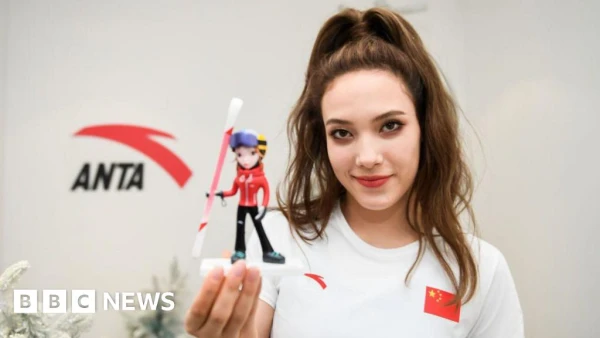
While not yet a household name in the West, Anta operates over 10,000 stores in China and sponsors top athletes like freestyle skier Eileen Gu. In February, it opened its first US flagship store in Los Angeles' Beverly Hills. The company's global push, amid US tariffs under Donald Trump, underscores the competitiveness of Chinese supply chains.
From Shoe Maker to Global Brand
Founded in 1991 in Jinjiang, Fujian province, Anta started as a small manufacturer. Jinjiang evolved from a quiet agricultural county into the world's "shoe capital" thanks to government industrial planning. Sneaker giants poured in seeking lower production costs, creating specialized clusters for footwear.
At the heart of the Jinjiang hub is Chendai town, a 40-square-kilometer area with thousands of factories and suppliers, producing shoes for Nike and Adidas. Each hub connected laces, soles, fabric, and logistics, enabling rapid design-to-store turnaround. By 2005, Fujian made nearly a fifth of the world's shoes, according to UN estimates. Jinjiang now employs about a third of its workers in shoe-making and ranks among China's highest-earning districts.
Similar manufacturing clusters emerged along China's eastern coast, specializing in clothes or electronics. University of Bath associate professor Fei Qin notes that this level of specialization was unmatched globally. "They learned not only how to make more, but how to produce better, faster and more consistently," she says.
Anta grew by making shoes cheaply and in bulk for global brands, while building a domestic distribution network. It partnered with national sporting events and slowly earned brand recognition in China. In 2007, Anta listed on the Hong Kong Stock Exchange, raising about HK$3.5 billion—a record for a Chinese sports company.
Branding consultant Wei Kan, who worked with Converse and Nike in China, says Anta's production hub allowed it to design and sell shoes faster than rivals. It targeted the same buyers as Western brands, and like other Chinese firms—Xiaomi, DJI, BYD—it learned the business by manufacturing for others before launching its own products.
Wooing the West
Anta now eyes Western markets. It runs over 12,000 stores in China and more than 460 abroad, with plans for 1,000 shops in Southeast Asia alone. Meanwhile, Nike, the market leader in sports footwear, has only about 1,000 stores worldwide.
Chinese firms often expand quickly at home but face challenges abroad, including perceptions of cheap, low-quality goods. Anta addresses this through its "multi-brand strategy." In 2009, it bought the rights to Fila in China and turned the Italian brand into a major earner. In 2019, Anta acquired a controlling stake in Amer Sports, gaining upmarket brands Arc'teryx and Salomon. It also owns Wilson, the US maker of NBA basketballs, and this year bought a 29% stake in Puma, pledging to help the German firm grow in China.
Sports business analyst Rufio Zhu says these acquisitions help Anta reach buyers wary of "made in China" labels. Celebrity sponsorships are also key—Anta has signed basketball stars Klay Thompson and Kyrie Irving, though it hasn't yet secured a partnership as iconic as Nike's with Michael Jordan. Being a Chinese brand also brings geopolitical hurdles, as seen with Eileen Gu, whose choice to represent China at the Olympics sparked controversy.
Anta's journey reflects a broader trend: decades as the world's factory have equipped ambitious Chinese companies to challenge the very firms they once supplied.