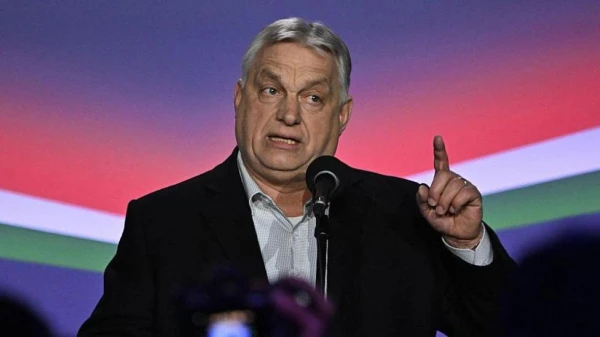
Hungarian Prime Minister Viktor Orban has called an emergency meeting of the National Defence Council following the discovery of explosives near a key pipeline that delivers Russian gas to Hungary. The incident, occurring just days before a pivotal election where Orban's party trails in polls, has ignited accusations of political manipulation from opposition figures.
Serbian President Alexander Vucic, a close ally of Orban, reported that Serbian military units found two backpacks containing powerful explosives and detonators near the village of Tresnjevac, approximately 20 kilometers from where the TurkStream pipeline enters Hungary. Vucic stated he immediately informed Orban of the discovery, promising updates as the investigation progresses.
"Our units found an explosive of devastating power," Vucic announced on Instagram. "I told PM Orban that we would keep him updated on the investigation."
Hungary relies heavily on the TurkStream pipeline, receiving between five and eight billion cubic meters of Russian gas annually. The pipeline is also crucial for Slovakia's energy supply.
Opposition leader Peter Magyar swiftly accused Orban of orchestrating "panic-mongering" with assistance from "Russian advisers." This allegation follows warnings from security experts about potential "false flag" operations that could be blamed on Ukraine to influence the election outcome.
"He will not be able to prevent next Sunday's election," Magyar declared. "He will not be able to prevent millions of Hungarians from ending the most corrupt two decades in our country's history."
Ukrainian officials preemptively denied any involvement. Foreign ministry spokesman Heorhiy Tykhyy stated on social media platform X: "Ukraine has nothing to do with this. Most probably, a Russian false-flag operation as part of Moscow's heavy interference in Hungarian elections."
Security analysts had previously warned about possible staged attacks. Hungarian expert Andras Racz predicted on April 2 that a "fake attack" on the TurkStream pipeline might be staged within Serbia, with explosives potentially identified as Ukrainian to allow Orban to blame Kyiv.
Former Hungarian counter-intelligence officer Peter Buda told media: "We had some solid preliminary information about this operation, including details about the place and possible timing. It's clear that Ukraine's interests aren't at stake here. An operation like this would help Orban before the election by influencing public opinion in his favour."
The Hungarian government maintains the threat is genuine. Foreign Minister Peter Szijjarto asserted on Facebook that Ukraine had previously attempted to impose an "energy blockade" through drone attacks on the pipeline in Russian territory, framing the latest incident as part of a broader pattern.
Orban has positioned hostility toward Ukraine as central to his election campaign, claiming that a "Kyiv-Brussels-Berlin" axis seeks to deprive Hungary of affordable Russian energy. He has accused Ukrainian President Volodymyr Zelensky of imposing an "oil blockade" after Russian oil shipments through Ukraine's Druzhba pipeline ceased in late January—a disruption Ukraine attributes to Russian-inflicted damage expected to be repaired by mid-April.
With elections scheduled for next Sunday and Orban's Fidesz party facing unprecedented opposition strength, the pipeline incident has intensified an already volatile political climate. Serbian authorities are expected to release initial investigation results on Monday, potentially providing clarity about the explosives' origins and intended targets.