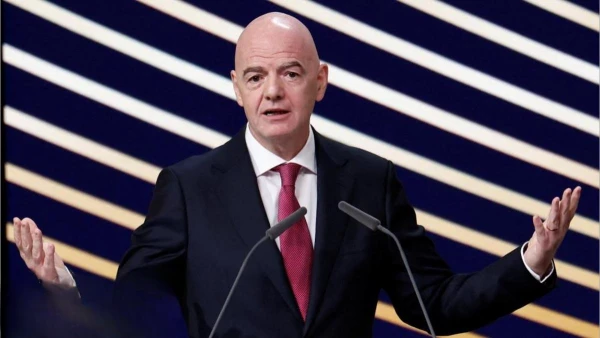
Recently leaked internal documents have exposed the fragile foundation of FIFA's controversial strategy to partly privatize the World Cup. Circulated among members, the 25-page presentation championed a massive commercial overhaul spearheaded by President Gianni Infantino—but a closer look reveals exactly why the ambitious proposal was swiftly abandoned.
Here are four critical flaws that doomed the plan from the start.
1. Misleading Financial Comparisons
The core of FIFA’s pitch rested on the premise that global football is drastically "under-monetized." The presentation compared FIFA's mere $1 revenue per global fan to the NFL's impressive $52.80. However, this metric is heavily skewed.
Unlike the annual NFL season, the World Cup is a quadrennial event. If revenue were calculated per World Cup match, FIFA's earnings would easily dwarf those of top domestic leagues. Furthermore, the NFL shoulders massive player payrolls, whereas FIFA doesn't pay the wages of global superstars. The presentation also ignored that football's wealth is largely decentralized, distributed across independent domestic and regional leagues rather than hoarded by a single governing body.
2. Looming Price Hikes and Paywalls
The proposal sought to establish a new, partially privatized company called FIFA Forward Enterprise (FFE). This entity would strip the non-profit governing body of its control over crucial operations, taking charge of ticketing, licensing, broadcasting, and sponsorships.
By leaning heavily into the high-revenue American sports model, the slides hinted at a future designed to squeeze fans. The structure paved the way for dynamic pricing, tickets soaring past the $1,000 mark, and a push to lock the world's most popular tournament behind broadcasting paywalls—a stark departure from the traditional free-to-air model currently safeguarded in regions like the UK and Europe.
3. Opaque Financial Motivations
The grand plan involved selling a 20% stake in FFE for $4.2 billion. Tellingly, this exact figure was earmarked to furnish an "extraordinary distribution" of $20 million to each of FIFA's 211 member associations—effectively a massive upfront payout to the very voters needed to approve Infantino's scheme.
While this cash injection would have been monumental for smaller nations, the document failed to explain how FIFA would fund its own long-term future once the initial billions were distributed. Crucial details, such as the exact value of an "annual license payment" FFE would owe FIFA, were noticeably absent. This left critics wondering if the new entity's sole mission would be to ruthlessly maximize investor returns at the sport's expense.
4. A Rushed Timeline and Unlikely Investors
The internal schedule revealed a breakneck pace, expecting bids and fund transfers to be finalized by the end of October. Members were being pressured to greenlight a massive structural shift with minimal time for scrutiny.
The primary investor linked to the deal was Thrive Eternal, led by Joshua Kushner. Interestingly, Thrive is traditionally focused on artificial intelligence. The firm recently ventured into sports investment under the thesis that live athletic events possess a unique, irreplaceable value that AI technology cannot disrupt or replicate.
Ultimately, the pitch outlined an opaque, hyper-commercialized future aimed at cementing the expensive, corporatized model expected at the 2026 World Cup. Burdened by glaring financial omissions and the prospect of alienating everyday fans, it is no surprise the scheme collapsed in a matter of days.