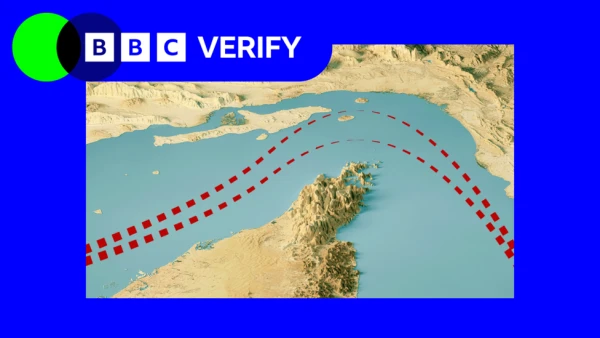
Iran's navy has issued a stark warning that any vessel attempting to cross the Strait of Hormuz without explicit permission "will be targeted and destroyed," according to shipping brokerage firm SSY. This threat comes despite a recently announced two-week ceasefire agreement that was supposed to guarantee safe passage through the critical waterway.
"Most shipping lines would want to get details and reassurances on what it actually takes to transit and those details are not available," said Lars Jensen from Vespucci Maritime.
The strategic strait, a mere 33 kilometers wide at its narrowest point, has become a geopolitical flashpoint in the ongoing US-Israel conflict with Iran. For over five weeks, Tehran has effectively choked off this vital artery that carries approximately one-fifth of the world's oil and liquefied natural gas supplies. The disruption has sent shockwaves through global markets, driving up energy prices and exposing the world economy's precarious dependence on this narrow passage.
While oil prices initially dropped on news of the ceasefire, shipping analysts remain skeptical about any immediate return to normal operations. By mid-afternoon on April 8, only three bulk carriers had navigated the strait since the ceasefire was announced—a stark contrast to the 138 ships that typically crossed daily before the conflict began in late February.
Ana Subasic from Kpler noted, "It is still too soon to tell whether this reflects a broader ceasefire-driven reopening or a previously approved exception."
Richard Meade, editor-in-chief of Lloyd's List, emphasized the ongoing danger for ship owners, stating, "We know Iran is essentially still in control of the strait, and the assumption is that ship owners will still need to seek permission from the IRGC... and how that's going to work is still not clear."
Analysis of the three ships that did cross reveals they took an unusual northern route hugging Iran's coastline, entering Iranian territorial waters—a significant deviation from the traditional southerly path through the middle of the waterway.
Nearly 800 vessels remain trapped in the region, most fully loaded with cargo. Meade predicts these stranded tankers will likely be prioritized for evacuation once crossings resume. However, the two-week ceasefire window creates additional uncertainty, with shipping analyst Niels Rasmussen noting, "I doubt there will be a large influx of ships into the Gulf... because they do not want to risk being trapped after the two-week window closes."
Further complicating matters are reports that Iran may require toll payments for safe passage—a potential violation of US sanctions against Tehran. Shipping lawyer James Turner explained that such payments could trigger legal repercussions unless Washington grants specific exceptions.
Thomas Kazakos of the International Chamber of Shipping raised additional safety concerns, stating, "We need to make sure that we have clear confirmation that the safety of navigation for the ships and the seafarers are being agreed."
While markets responded positively to the ceasefire announcement, with Brent crude falling about 13%, expectations remain tempered. As Meade cautioned, "Oil prices responded because it is a positive directional move, but I don't think it in any way suggests that we're going to see that 20% of global energy flowing back through at normal levels any time soon."