A growing consensus among political analysts suggests that Israel has effectively established a single-state reality across the territories west of the Jordan River, fundamentally reshaping the geopolitical landscape of the region.
Political scientists Shibley Telhami and Marc Lynch argue that the traditional framework of a two-state solution has become obsolete. In their 2023 publication "The One State Reality," they contend that Israel exercises sovereign control over all land between the Jordan River and the Mediterranean Sea, where Palestinians live under a separate legal system with limited rights.
"Palestine is not a state in waiting, and Israel is not a democratic state incidentally occupying Palestinian territory," the scholars wrote. "All the territory west of the Jordan River has long constituted a single state under Israeli rule."
The situation has intensified since October 2023. In Gaza, Israeli military operations have displaced more than two million residents into increasingly crowded conditions, with no clear path for relief or reconstruction. Meanwhile, settlement expansion in the West Bank has accelerated dramatically, with more approvals in the past year than in the previous two decades combined.
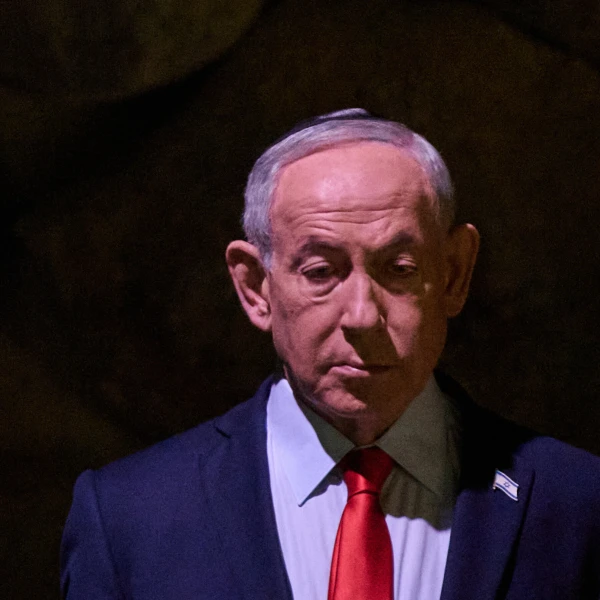
Prime Minister Benjamin Netanyahu recently endorsed a settlement project that effectively bisects the West Bank, stating plainly: "We are going to fulfill our promise that there will be no Palestinian state. This place belongs to us."
To the north, Israel's military operations in Lebanon have displaced approximately one million people, with up to 600,000 potentially unable to return to their homes as Israel establishes security zones. While Israel faces legitimate security threats from Hamas and Hezbollah, critics argue these actions constitute collective punishment affecting civilian populations.
Public opinion in the United States shows shifting attitudes. A February Gallup poll found, for the first time, more Americans sympathized with Palestinians than Israelis. Among Democrats and younger Americans, the gap is particularly pronounced.
Telhami, the Anwar Sadat Professor for Peace and Development at the University of Maryland, and Lynch, director of the Project on Middle East Political Science at George Washington University, maintain that acknowledging this one-state reality is essential for any meaningful political discourse about the region's future.
The implications extend beyond borders and politics to fundamental questions about democracy, human rights, and international law as Israel consolidates control over territories and populations with vastly different legal statuses.