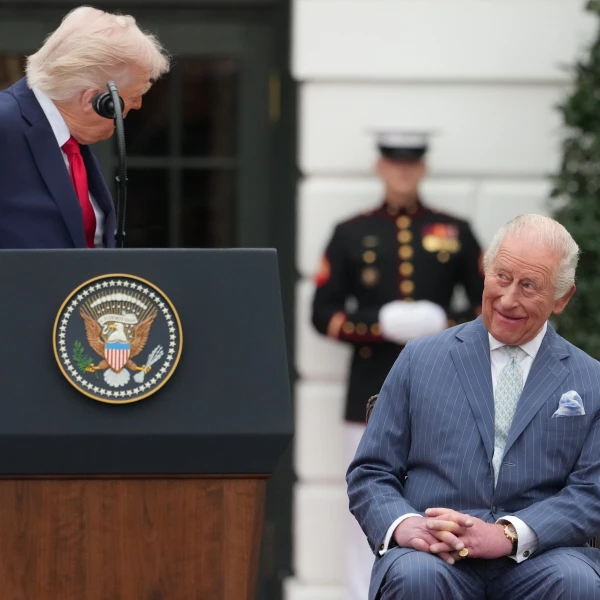
The last time Charles came here for a state visit, nobody seemed to notice. I saw him up close during his trip in the autumn of 1985, from his stop at JCPenney in a suburban mall to promote British clothing to a starry state dinner. I was impressed.
The Prince of Wales had a reputation back then as a bit of a wimp, always chafing in the shadow of his towering mother, resentful about being relegated to cutting ribbons. In a flashy decade full of bling kings like the New York developer Donald Trump, Charles seemed like a man from another time. He yearned to be taken seriously and to have an impact on global issues.
As the charming British actor Peter Ustinov, who attended the state dinner, told me: "He has a clear sense of what he would do if allowed to. One regrets that he didn't live in 1400."
Touring the sights in Washington, Prince Charles impressed salesclerks and senators alike with his genuine interest in culture and politics and his playful and self-deprecating small talk. As I wrote in The Times back then, "He went out of his way to move past protocol, and was equally at home discussing the architecture of Baltimore, the actresses on the television show 'Dynasty,' the opera roles that Beverly Sills made famous and the tenuous state of international relations."
It didn't matter. Nobody was paying attention. He was simply the man who accompanied Princess Diana to Washington.
Now, decades later, King Charles returns to an America transformed — less gracious, more divided, and still haunted by the very figure who once overshadowed him.