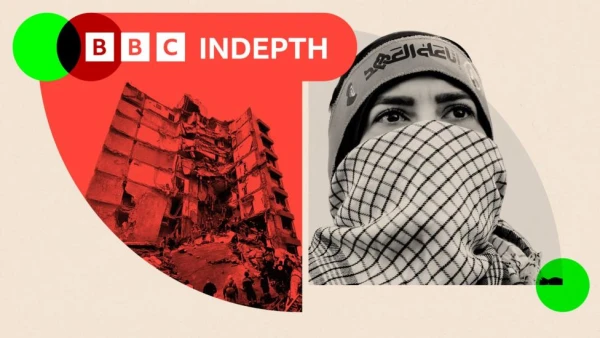
With Lebanon once again caught in the crossfire of conflict, President Joseph Aoun faces a monumental challenge: convincing Hezbollah to lay down its arms. The former army chief, who took office after a devastating war between Israel and the Iran-backed militia, initially vowed to disarm the group. "I was born an optimist," Aoun remarked during a meeting last August at Beirut's Baabda Palace, where he outlined his vision for a unified Lebanon.
Despite a fragile ceasefire that ended the 2024 war, tensions have persisted. Israel continues near-daily strikes on targets it links to Hezbollah, while the group retaliates with rocket fire, citing self-defense against what it views as an existential threat. The cycle of violence escalated further after the death of Iranian Supreme Leader Ayatollah Ali Khamenei in February, triggering another round of hostilities.
"Disarmament can't be done by force," Aoun emphasized, acknowledging the delicate balance required to avoid plunging Lebanon into civil war.
Hezbollah, founded in the 1980s during Israel's occupation, has evolved into more than a militia. It operates as a political party, holds parliamentary seats, and provides social services in areas where the state is absent. This deep integration complicates efforts to enforce the Taif Agreement of 1989, which mandated the disarmament of all militias, and UN Resolution 1701 from 2006, which demanded Hezbollah's demilitarization.
Aoun's proposal for direct negotiations with Israel—a significant step given the lack of diplomatic relations—was initially ignored. It gained traction only after the U.S. brokered a ceasefire with Iran and Israel conducted massive airstrikes that killed over 300 people in a single day. A meeting between Lebanese and Israeli ambassadors, scheduled in Washington, aims to discuss a lasting truce, but Lebanon's leverage remains limited.
Public opinion in Lebanon reflects deep divisions. A recent poll showed nearly 80% of Lebanese support restricting weapons to the national army, but responses split along sectarian lines: Christians, Druze, and Sunnis overwhelmingly favor disarmament, while more than two-thirds of Shias oppose it. Michael Young, a senior editor at the Carnegie Center in Beirut, noted the impracticality of forced disarmament: "You can't come to the Shia community and impose this by force. You'll fail, and this will be a disaster."
Hezbollah's secretary-general, Naim Qassem, has rejected nationwide disarmament, though the group agreed in 2024 to withdraw fighters and weapons from southern Lebanon. The militia maintains control over key areas, including Beirut's southern suburbs and the Bekaa Valley, where part of its arsenal is stored. Aoun's "state monopoly on arms" policy hinges on negotiation rather than confrontation, but with Hezbollah resistant and Israel aggressive, the path to peace remains fraught.
As Lebanon navigates this crisis, the government finds itself with few options. "Lebanon has nothing to offer," Young concluded, highlighting the stark reality that without Hezbollah's cooperation, lasting peace may remain elusive.