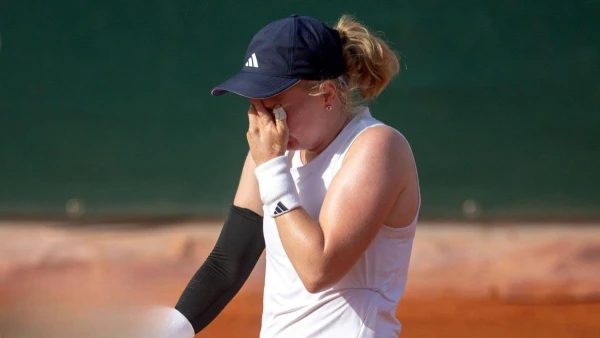
Solo travel, sleeping in a transit van, and sharing rooms are all money-saving tactics used by lower-ranked tennis players to survive on tour.
The financial struggles of these players have prompted top stars like Aryna Sabalenka, Coco Gauff, and Jannik Sinner to demand that Grand Slams allocate a larger share of revenue to prize money. Sabalenka insists the goal is not personal enrichment but to "stand up and fight" for those further down the rankings.
Francesca Jones, Britain's world number 105, says, "There's not enough money for players on tour. Where that funding should come from is not for me to say. But we don't earn enough. You don't break even unless you're in the top 75 and even then it is tight."
Anna-Lena Friedsam, a former top-50 player now outside the top 100, agrees: "It is a tough industry. Our whole year is based on how much money we make in the Grand Slams."
For most players, increased winnings translate directly into better support. Britain's Toby Samuel earned £75,000 in Paris after qualifying for a main draw for the first time—enough to fund the rest of his season. "These events are where you make real money that can boost your career and pay for your team," he said.
Hiring a coach, physiotherapist, or fitness trainer consumes the bulk of expenses. Rinky Hijikata of Australia remembers skipping proper meals to save cash: "It all costs a lot of money. I feel that a lot of people outside tennis don't really understand that."
Friedsam estimates she needs to win about £300,000 a season to break even. Without sufficient income, she travels without a coach.
International travel adds another burden. Bolivia's Juan Carlos Prado Angelo says affording flights is "very difficult for every player" from South America. He trains across two countries, paying to transport his team.
Australia's Tristan Schoolkate usually flies economy on long-haul flights to save money: "The travel does cost a lot. I can't wrap my head around the prices to fly business."
Accommodation is another challenge. Samuel used to share a room with his coach until his Roland Garros qualification allowed separate rooms. Billy Harris famously slept in his Transit van for three-and-a-half years, cooking on the roadside and parking at McDonald's.
Jones, who has a rare genetic condition, says her physical struggles require a larger team, making it harder to break even. "Unless I get back to the ranking I was at the start of this year, breaking even is not going to happen," she said.
Grand Slams defend their current contribution—about 15% of revenue—and cite state-of-the-art facilities. Top players seek 22% by 2030 and recently limited pre-French Open media commitments in protest. Further talks are scheduled in Paris next week.
"We've been talking about this for how many years now? Nothing has moved," said Sloane Stephens, a former US Open champion now ranked 363rd.
Prize money trickling down the draws has increased significantly, but Hijikata notes that even top players endured similar hardships. "If the next generation have it better then I guess that would be a great outcome for everyone."