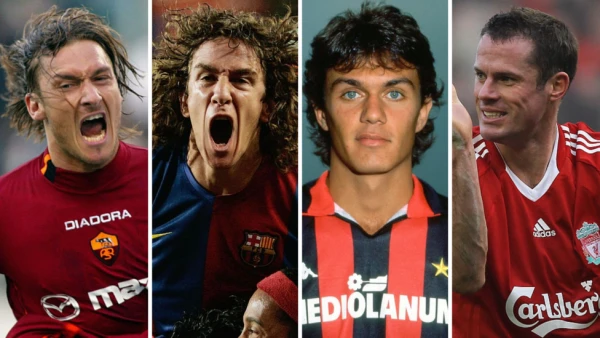
Every year at San Mames, the iconic home of Athletic Club in Bilbao, a special ceremony honors a rare breed of footballer: those who spent their entire professional career with a single club.
In 2015, Athletic Club—famous for its policy of fielding only players from the Basque region—created the One-Club Award to celebrate this extraordinary loyalty in an era dominated by big-money transfers.
"We wanted to recognize that most kids dream of playing for one club their whole lives," explains Dan Parry from the club's communications team. "It's an award that celebrates the unique bond between a player, the team, and its supporters."
With that spirit in mind, here is a ranking of football's top one-club men, a testament to enduring commitment in a transient sport.
The Modern Emblem: Iñaki Williams
Iñaki Williams stands as a powerful symbol of Athletic Club's values. His story is one of remarkable perseverance, beginning with his parents' arduous journey from Ghana to northern Spain. "We had to suffer a lot," Williams has reflected. "Thanks to God, we are all here together now, living a really good life."
A childhood fan of the club, Williams became its first black goalscorer and has now made over 500 appearances, including a La Liga record 251 consecutive matches. At 31, he is on track to fulfill his dream: spending his entire career with his boyhood club.
Legends of Loyalty
While modern football makes one-club careers increasingly rare, history is rich with examples. The list includes iconic figures who defined their clubs.
- Lev Yashin (9th): The legendary Soviet goalkeeper, a Ballon d'Or winner, spent his entire career from 1950 to 1970 with Dynamo Moscow, also representing them in ice hockey.
- Giuseppe Bergomi (8th): "Lo Zio" (The Uncle) made his Inter debut at 16 and remained for his entire career, amassing 519 appearances for the Nerazzurri.
- Matthew Le Tissier (7th): The Southampton maestro spent his career delighting fans at The Dell with spectacular goals, turning down moves to bigger clubs to stay with the Saints.
- Jamie Carragher (6th): The Liverpool defender, who played under six managers at Anfield, considers his one-club status a crowning achievement. "After winning the Champions League," he said, "being a one-club man is the biggest achievement of my career."
- Carles Puyol (5th): Barcelona's rock-solid captain refused a transfer offer before his debut and went on to win every major trophy, playing under eight different managers at Camp Nou.
- Tony Adams (4th): Arsenal's "Mr. Arsenal" captained the club through its transformation under Arsène Wenger, winning league titles in three different decades across 672 appearances.
- Ryan Giggs (3rd): The Manchester United icon played an astonishing 940 of his 963 games under Sir Alex Ferguson, winning 13 Premier League titles and evolving from a flying winger to a central midfielder over 24 seasons.
The Ultimate One-Club Icons
The top two spots are reserved for figures whose names are inseparable from their clubs' identities.
While the original article's conclusion was cut short, it pointed toward Paolo Maldini and Francesco Totti as the pinnacle of one-club devotion. Maldini's 25-year career at AC Milan and Totti's 25-year reign as the heart and soul of AS Roma represent the ultimate expression of loyalty, where a player doesn't just represent a club but becomes a permanent part of its soul.
"They think their status as a one-club player is something that's been undersung throughout their careers," notes Parry. "One thing that also strikes me is how humble they've been, which is quite telling considering the values of the award."
In today's football landscape, the one-club player remains a cherished anomaly—a testament to legacy over lucre, and identity over itinerancy.