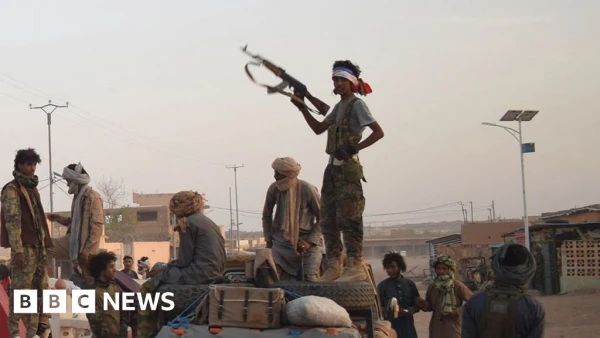
A coordinated rebel offensive that reached Mali's capital, Bamako, and saw the assassination of the defense minister has sent shockwaves through the country and raised serious questions about the stability of the military junta led by Colonel Assimi Goïta. The attacks, claimed by a rare alliance between the separatist Azawad Liberation Front (FLA) and the al-Qaeda-linked JNIM group, also resulted in the withdrawal of Malian and Russian forces from the northern city of Kidal, now under FLA control.
Analysts outline three possible scenarios for the junta's future:
Scenario 1: Junta stays in power and fights back This remains the most likely short-term outcome, as the military still controls major cities and institutions. However, the success of a planned counter-offensive will be critical. The death of Defense Minister Sadio Camara, a key figure and main interlocutor with Russia, could weaken coordination and military effectiveness. The FLA has signaled ambitions to advance on Gao and Timbuktu, raising the prospect of prolonged conflict.
Scenario 2: Junta stays in power with Russian support but seeks new partners The attacks have damaged Russia's reputation as a security partner in the Sahel. Mali may diversify its military alliances, potentially strengthening ties with Turkey, which already supplies drones, or re-engaging with the US. The Alliance of Sahel States (Mali, Niger, Burkina Faso) could also play a larger role, though it has yet to act as a joint fighting force.
Scenario 3: Pressure forces junta from power This is the most serious challenge to military rule since the 2020 coup. Growing public discontent could lead to another coup by a different faction, or an FLA-JNIM takeover. However, the alliance between nationalist separatists and Islamists faces internal tensions.
Colonel Goïta has not yet addressed the nation, but has met with Russia's ambassador and visited wounded soldiers. The coming days will be decisive for Mali's stability and the junta's survival.