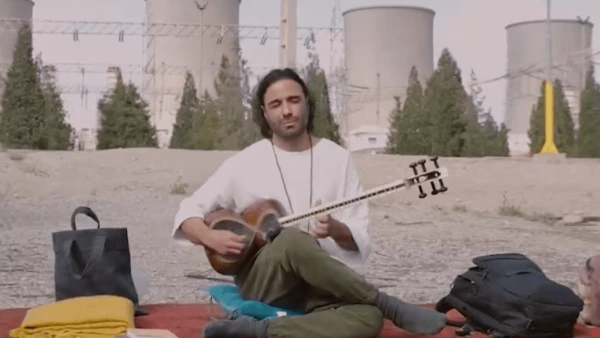
In a striking act of cultural resistance, acclaimed Iranian musician Ali Ghamsari has transformed the industrial landscape outside Tehran's Damavand power station into an impromptu stage for political protest. The artist's symbolic performances come as a direct response to recent threats from former U.S. President Donald Trump, who has repeatedly targeted Iran in his public statements.
Ghamsari, known for his mastery of traditional Persian string instruments, has been conducting daily musical demonstrations at the facility's perimeter, using his art to voice opposition to what he describes as "dangerous rhetoric" from American political figures. The Damavand station, a critical energy hub for the capital region, serves as a potent backdrop for his message about national sovereignty and resilience.
"When words fail, music speaks," Ghamsari explained during a brief interview between performances. "This isn't just about one politician's comments—it's about defending our dignity through the universal language of art."
The musician's unconventional protest has drawn attention from both local residents and international observers, creating a unique intersection of cultural expression and political commentary. Unlike traditional demonstrations featuring speeches or placards, Ghamsari's approach relies entirely on musical performance, with traditional Persian melodies echoing against the industrial complex's concrete structures.
Political analysts note that such artistic protests represent an emerging trend in Iranian civil society, where cultural figures increasingly use their platforms to engage with geopolitical issues. The Damavand performances coincide with heightened tensions between Iran and the United States, though Ghamsari emphasizes that his message transcends immediate political conflicts.
"Art should challenge power structures," Ghamsari stated between compositions. "When threats are made against my homeland, I respond with the most powerful weapon I possess—our centuries-old musical heritage."
Local authorities have permitted the demonstrations to continue uninterrupted, suggesting a degree of official tolerance for this form of cultural protest. The power station's management has issued no statements regarding the daily performances occurring just beyond their security perimeter.
As sunset colors the sky behind the facility's cooling towers, Ghamsari's final notes of the day blend with the hum of transformers—a temporary harmony between art and industry, protest and production, in a nation navigating complex international relationships.