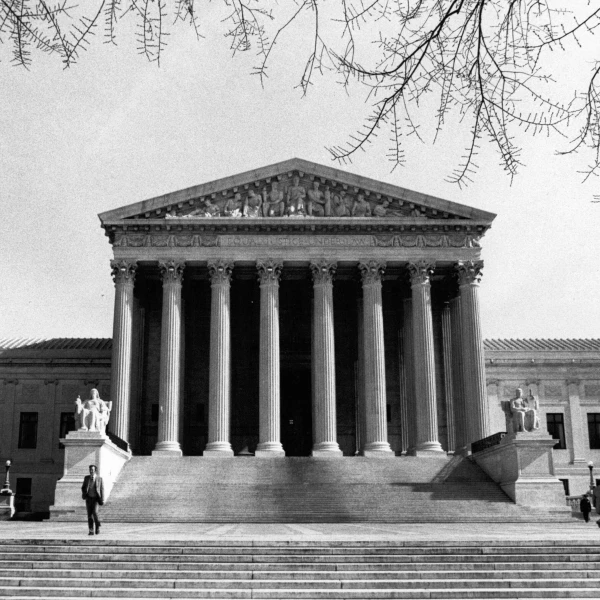
In a recent letter to the editor, Bradley A. Smith, a former chairman of the Federal Election Commission, offers a counterpoint to a front-page article on the 1976 Supreme Court case Buckley v. Valeo. While the original piece focused on how the ruling empowered wealthy donors, Smith argues that its most important effect was protecting free political speech from government overreach.
Smith notes that the Federal Election Campaign Act of 1971 would have severely limited spending by challengers and advocacy groups. For instance, House challengers would have been capped at $70,000 in 1976—a sum inadequate to reach a district of 700,000 people even then. In 2024, victorious challengers spent nearly seven times that inflation-adjusted cap.
He also warns that the act would have silenced organizations like the ACLU, Planned Parenthood, and the Chamber of Commerce by limiting their spending "relative to" a candidate to just $1,000. Smith concludes that the act's true purpose was to limit political discussion and that the Supreme Court was wise not to hand self-interested legislators the power to decide who speaks too much.