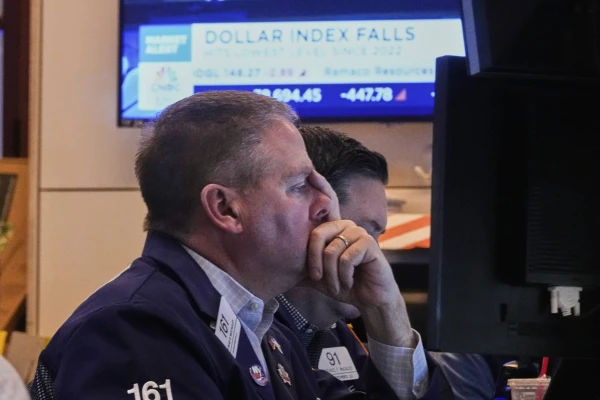
Global oil prices surged sharply on Monday following Iran's decision to close the strategic Strait of Hormuz, reigniting fears of supply disruptions and sending stock markets into retreat. The move came after a brief reopening of the waterway, which handles approximately one-fifth of the world's oil and liquefied natural gas shipments.
Investor sentiment soured as the closure heightened anxieties over a potential escalation in the ongoing Middle East conflict. This development coincided with the approaching end of a two-week ceasefire between the United States and Iran, casting doubt on the future of diplomatic talks.
"Renewed attacks on commercial vessels in the Strait of Hormuz increased fears of supply disruptions and raised the risk of a broader escalation in hostilities between the US and Iran," said David Morrison, an analyst at Trade Nation.
Wall Street indices edged lower from recent record highs, with the S&P 500 and Nasdaq Composite posting modest declines. European markets experienced steeper losses, with Frankfurt's DAX dropping 1.2 percent and Paris's CAC 40 shedding 1.1 percent.
Analysts noted a stark shift in market mood from the previous Friday, when oil prices had plunged on news of the strait's temporary reopening. The sudden reversal underscores the fragile nature of the geopolitical landscape.
"The market mood is very different at the start of the week compared to Friday," observed Kathleen Brooks, research director at trading group XTB.
Diplomatic efforts remain in flux. While Washington has announced plans to send a delegation to Pakistan for a new round of talks "soon," Iran has stated it will not participate while a U.S. naval blockade of its ports remains in place. The blockade and a recent seizure of an Iranian cargo ship were cited by Tehran as breaches of the ceasefire agreement.
Market participants are now closely watching whether negotiations can salvage the fragile truce.
"Traders were assessing whether the ceasefire can be salvaged through this week's diplomatic talks, with recalibration on the probability of military escalation," said Chris Weston of Pepperstone.
Despite the caution, some investors remain hesitant to exit the market entirely, wary of missing a potential rally should a diplomatic breakthrough occur.
"While US investors are wary over what happens next, they are afraid to step away from the market because we know that if a deal is announced, the market's going to go up very quickly," commented Jack Ablin of Cresset Capital Management.
In contrast to the declines in the West, major Asian markets like Tokyo, Hong Kong, and Shanghai posted gains, largely seen as catching up to a rally that occurred elsewhere on Friday.