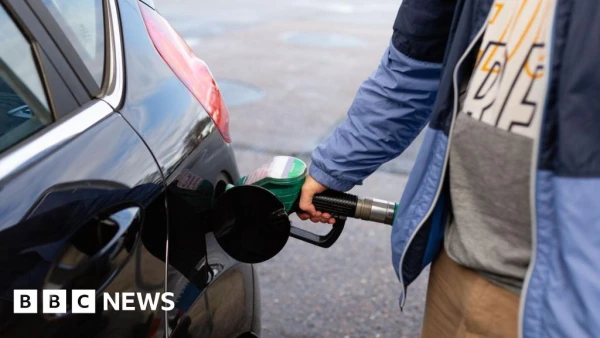
Oil prices have surged sharply after reports emerged that the US is preparing for an extended blockade of Iran. Brent crude hit around $115 per barrel on Wednesday, up from just over $110 at Tuesday's close, before settling slightly lower at $114.37.
The jump follows a Wall Street Journal report indicating that US President Donald Trump has instructed aides to prepare for an extended blockade of Iran's ports, aiming to further pressure the country's economy. In response, Iran has stated it will continue disrupting traffic through the Strait of Hormuz.
The conflict has already caused significant volatility in oil markets. The Strait of Hormuz, which normally carries about a fifth of the world's oil and LNG supplies, has been effectively closed for weeks due to the conflict. Iran has severely restricted shipping, warning that any vessel approaching the strait would be targeted. The US countered by announcing it would intercept or turn back vessels traveling to or from Iranian ports.
Despite recent fluctuations, oil remains far above pre-conflict levels. Brent crude dropped to $90 a barrel on April 17 after a ceasefire between Israel and Lebanon was announced. However, it has been rising steadily over the last 12 days as the US blockade continues.
On Wednesday, Trump urged Iran on Truth Social to 'get smart soon' and sign a deal, saying the country 'couldn't get its act together.' The Wall Street Journal cited US officials saying Trump chose to continue the blockade because resuming bombing or walking away carried more risk.
Iranian officials claim they can withstand the blockade using alternative trade routes. Meanwhile, the World Bank forecast that energy prices could surge by 24% in 2026 to their highest level since Russia's invasion of Ukraine, if the disruptions last beyond May.
European stocks fell Wednesday as investors digested earnings and awaited the US Federal Reserve's interest rate decision. The FTSE 100 dropped 0.76%, the Stoxx 600 fell 0.4%, France's CAC lost 0.54%, and Germany's DAX edged lower. Asian markets mostly rose, continuing their recovery.
"The market is increasingly shifting towards a view that no longer expects a quick and lasting peace, nor an immediate reopening of the Strait of Hormuz," said Arne Lohmann Rasmussen, chief analyst at Global Risk Management.