Five former US officials, including a former top military lawyer, have criticized the Pentagon for failing to acknowledge potential American involvement in a deadly strike on an Iranian school earlier this year, calling the lack of transparency highly unusual.
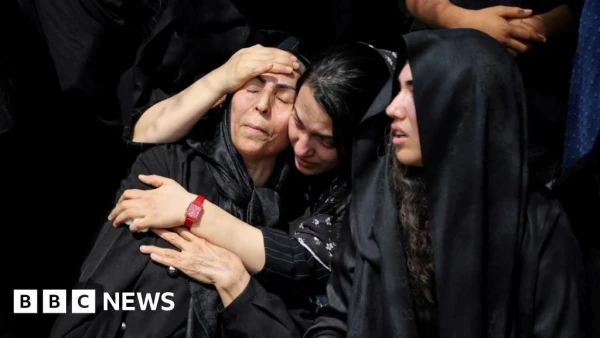
The attack occurred on February 28, when a missile hit a primary school in Minab during the opening salvos of the US-Israeli war with Iran. Iranian officials reported 168 people killed, including about 110 children.
Two months later, the Pentagon has only stated that the incident is under investigation. US media reported in early March that military investigators believed American forces were likely responsible for unintentionally hitting the school, but no final conclusion has been reached.
Lt Col Rachel E VanLandingham, a retired Judge Advocate General in the US Air Force and former senior legal adviser at US Central Command, said the current position "strikingly departs from the standard response." She argued that previous administrations demonstrated a commitment to the law of war, but what is missing now is accountability and a pledge to prevent recurrence.
President Trump on March 7 blamed Iran for the strike without evidence, and later claimed without proof that Iran possessed Tomahawk missiles. Defense Secretary Pete Hegseth said on March 4 that the US "never target[s] civilian targets" but declined further comment.
The BBC independently confirmed video showing a US Tomahawk missile striking an Iranian Revolutionary Guard Corps base adjacent to the school. US media reports, citing unnamed officials, said a preliminary inquiry found a US missile hit the school due to outdated target coordinates supplied by a US intelligence agency. The Pentagon has not commented.
Wes Bryant, a former senior adviser on civilian harm mitigation at the Pentagon's Civilian Protection Center of Excellence, said the fact that an investigation was formally initiated indicates the US likely caused the strike. "To not even be able to have any comment on it whatsoever is just unacceptable," he said.
Congressional Democrats have repeatedly written to Hegseth seeking answers. The BBC reviewed two Pentagon response letters that gave no answers, stating only that an investigating officer from outside the CENTCOM chain of command had been appointed.
Senator John Kennedy (R-LA) condemned the strike as "a terrible, terrible mistake." House Armed Services Committee Democrat Adam Smith called the Pentagon's closed-door briefings "pathetic and completely inadequate."
The BBC compared the Pentagon's response to three historical cases of civilian casualties—the 2021 Kabul drone strike, the 2015 Kunduz hospital bombing, and the 1991 al-Amiriyah shelter attack—where the US acknowledged responsibility or provided detailed explanations within weeks.