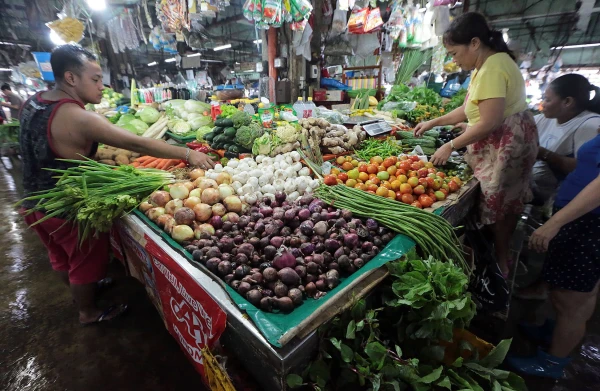
MANILA, Philippines – Economists from the University of Asia and the Pacific (UA&P) warn that inflation in the Philippines is projected to exceed 5 percent in April, driven by the ongoing energy crisis and its ripple effects on prices of goods and services. This surge could undermine the country's economic recovery and push full-year inflation to 5.1 percent, breaching the government's 2–4 percent target range.
UA&P's latest analysis, detailed in The Market Call, aligns with the Bangko Sentral ng Pilipinas' (BSP) outlook for the month. The think tank noted that while oil prices may stabilize around $80 per barrel, inflation is expected to hover near 5 percent due to second-round effects from the initial price shock.
“We anticipate faster inflation in the coming months as second-round effects from the initial oil price shock and base effects push inflation above target,” UA&P stated.
In March, inflation hit 4.1 percent, the highest in nearly two years, coinciding with the peak of the Middle East conflict. UA&P has retained its first-quarter growth forecast at 3.1 percent, citing potential support from increased government spending, a stronger labor market, export gains, and improved bond conditions. However, the conflict poses significant risks to these gains.
“The global impact of the Middle East conflict resulting in slower growth and higher inflation has similar, even magnified effects on the Philippine economy,” UA&P explained. “Government spending and employment may pick up, but high inflation and interest rates will limit gains.”
Recent data shows government spending surged by 25.8 percent to P423.2 billion in February, driven by allocations to local governments. Meanwhile, the unemployment rate eased to 5.1 percent in February, with labor force participation rising to 63.8 percent. Despite these improvements, economists caution that the conflict could lead to temporary layoffs and dampen economic momentum, highlighting the fragile nature of the recovery amid inflationary pressures.