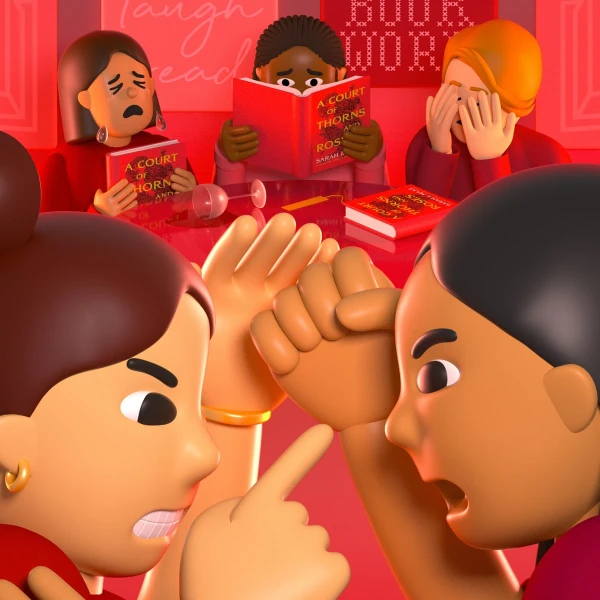
Picture a typical book club: a tranquil gathering of friends sipping wine, sharing snacks, and politely discussing a wholesome novel. Now, erase that image and replace it with demands for werewolf erotica, bitter grudges, and threats to settle literary disputes in the parking lot.
For a woman named Laura, a seemingly innocent reading group with fellow church mothers quickly devolved into a battleground. One member relentlessly pushed for explicit romance novels—often referred to as "spice"—clashing with the rest of the group's more conservative tastes. When the members eventually laid down strict "no smut and no violence" guidelines, the ousted romance enthusiast resorted to attending meetings merely to sit in the corner and sulk.
Despite constant anxieties about the decline of reading in the digital age, we are actually living in a book club renaissance. Recent data indicates a massive spike in reading-related gatherings, largely fueled by younger generations looking for offline connections. Yet, as these groups multiply, so do the spectacular implosions.
Freelance writer Steph Auteri is all too familiar with the myriad ways a reading group can self-destruct. She notes that clubs often fail when they mix two fundamentally incompatible types of attendees: the hardcore bibliophiles who want deep literary analysis, and the casual socializers who show up purely for the wine and vibes.
"As much as I love a time to get together and drink wine and snack, I’m a book nerd, so I want to be talking about the book," Auteri noted, adding that trying to discuss prose with people who skipped the reading is an exercise in futility.
Auteri's worst book club memory? Hosting a virtual discussion during the pandemic where every single attendee despised the assigned reading—only to find out someone had invited the author to the Zoom call.
Even when everyone actually reads the assignment, peace is never guaranteed. Barbara VanDenburgh, who runs the First Draft Book Club in Phoenix, Arizona, recently watched her typically mild-mannered group nearly come to blows over Ann Patchett’s latest novel. A controversial theory proposed by one member caused the room to absolutely erupt, leading to a half-joking threat of a parking lot brawl.
VanDenburgh has her own infamous history with the group. Years ago, she selected Ottessa Moshfegh’s dark, unsettling novel Eileen for their December meeting, completely ruining the festive holiday mood. Her club members have never let her forget it.
Despite the occasional backlash, experienced organizers like VanDenburgh and Toronto-based writer Erin Pepler believe that successful reading groups actually require a "benevolent dictator." Leaving the book selection and conversation flow to organic group consensus often leads to hurt feelings and chaos. Pepler points out that many readers struggle to separate their personal identity from their book recommendations, treating any critique of a novel as a direct personal insult.
Sometimes, the drama transcends the pages entirely. A New York reader named Jenn watched her reading group implode when one of its original founders angrily accused the rest of the members of being too politically liberal. The founder dramatically dissolved the club via message—only for the rest of the group to shrug it off and continue meeting without her.
While avoiding interpersonal friction completely might be impossible, veteran organizers suggest that establishing clear etiquette guidelines from day one is the best way to keep the peace. Whether you're debating the nuances of contemporary fiction or arguing over werewolf smut, a little structure goes a long way in ensuring your book club doesn't end in an all-out brawl.