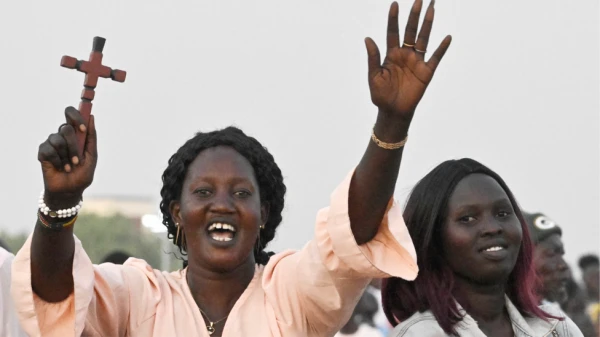
Pope Leo XIV is embarking on a landmark 11-day tour of Africa, visiting four nations in what Vatican officials describe as a deliberate effort to spotlight the continent's growing significance within the Catholic Church. The journey, covering nearly 18,000 kilometers, underscores Africa's status as home to over 288 million Catholics—more than a fifth of the global faithful—and one of the Church's fastest-growing regions.
Beginning in Algeria, the Pope's itinerary holds deep personal and theological resonance. As the first pontiff from the order following the teachings of St. Augustine, born in what is now Algeria, Pope Leo will visit the ancient bishopric of Hippo (modern Annaba) to celebrate Mass. This historic first papal visit to the country will emphasize interfaith dialogue, with planned stops at the Great Mosque of Algiers and the Basilica of Our Lady of Africa—a site venerated by both Muslims and Christians.
Father Peter Claver Kogh, Rector of the Basilica, expressed hope for the visit, stating:
"Pope Leo will encourage us in our faith to build a world where there is peace and where people live together in harmony."
The tour proceeds against complex backdrops. In Cameroon, the Pope will address the protracted conflict in anglophone regions, where UN estimates report over 6,000 deaths and half a million displaced. A Mass for peace and justice is scheduled in Bamenda, a city central to the violence. Ernestine Afanwi, a displaced resident, shared her longing:
"If I was face-to-face with the Pope, I would tell him all my problems [and ask] him to anoint the land."
Angola, recovering from decades of civil war, will host a Mass for approximately 200,000 faithful, focusing on themes of peace and reconstruction. The final stop, Equatorial Guinea, will see the Pope address social justice issues while visiting a psychiatric hospital and a prison, amid international criticism of the long-ruling government's human rights record.
This intensive tour, featuring around 25 speeches and numerous meetings with political and religious leaders, marks Pope Leo's second major foreign visit since his election last year. It signals the Vatican's strategic commitment to Africa, framing the continent not only as a bastion of present faith but as a cornerstone of the Church's future.