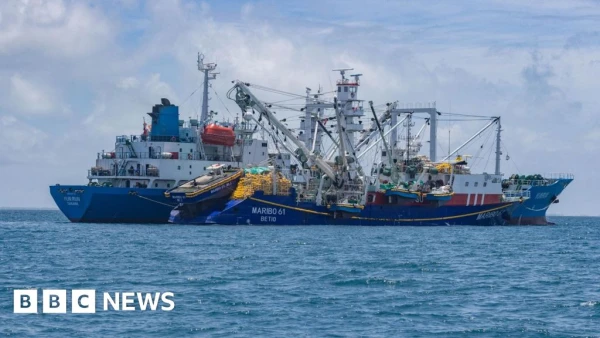
Kiribati, a Pacific island nation of 33 atolls, relies on tuna fishing licenses for over 70% of government revenue—the highest share of any country. Its vast Exclusive Economic Zone (EEZ), spanning 3.4 million square kilometers, is richer in tuna than any other nation, but climate change is driving the fish eastward to cooler waters.
Scientists warn that warming ocean temperatures could permanently push skipjack, yellowfin, and bigeye tuna out of Kiribati's waters, slashing the $137 million it earned from licenses in 2024. That income, which accounts for roughly 40% of GDP, is a "critical financial lifeline," according to Riibeta Abeta, permanent secretary of the Ministry of Fisheries.
Local fishermen will also suffer. The Pacific Community projects that under a low-emissions scenario, catches in the Line Islands could drop by two-thirds. With a population of 130,000 expected to grow, food security is at risk. The average Kiribatian consumes 100 kilograms of fish annually—far more than the 9 kilograms in the US.
In response, the Green Climate Fund has launched a $156.8 million project to help 14 Pacific nations adapt. Kiribati is also building its own tuna processing plants, developing aquaculture for species like milkfish and sea cucumbers, and exploring tourism and renewable energy to diversify revenue.
Yet the country faces an existential threat: its highest point is just two meters above sea level. As Abeta puts it, "Kiribati retains grounds for optimism," but the ocean that sustains it is also its greatest danger.