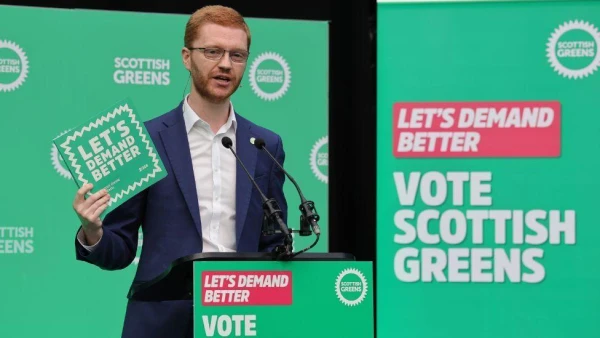
The Scottish Greens have launched an ambitious manifesto promising sweeping transformations across Scotland, positioning themselves as the bold alternative in the upcoming Holyrood elections.
At a high-profile event in Glasgow, co-leaders Gillian Mackay and Ross Greer outlined a comprehensive plan that would reshape public services, overhaul taxation, and accelerate the transition to renewable energy. The party vowed to "stretch the powers of devolution to their limits" to create what they call a "fairer and better future."
Transport Revolution
The Greens propose making bus travel completely free for all Scottish residents—a dramatic expansion of the current scheme that covers only under-22s and over-60s. As an interim measure, they would immediately scrap fares for everyone under 30 and cap all other bus journeys at £2.
Ross Greer declared, "Our manifesto could genuinely transform Scotland so that rather than serving the interests of an incredibly wealthy few, it would actually meet the needs of people and planet."
Additional transport reforms include:
- Bringing bus networks back under local control with opportunities for public investment through "bus bonds"
- Introducing an integrated ticket system covering all transport networks with capped pricing
- Eliminating first-class carriages on ScotRail trains to create more space for bicycles and prams
Taxing Wealth and Pollution
The party plans to fund their ambitious agenda through new taxes targeting Scotland's wealthiest individuals and corporations. Their proposals include:
- A Scottish wealth tax targeting the richest 2% of Scots
- New levies on landlords, supermarkets selling alcohol and tobacco, gambling companies, and large online retailers
- A 15% "mansion tax" on properties worth over £1 million
- Replacing council tax with a residential property tax based on actual property values
"The richest 2% of Scots have more wealth than the poorest 50%," Greer noted. "It's time for them to pay their fair share."
Childcare Expansion
In what Mackay called "the biggest expansion of free childcare for a generation," the Greens would extend Scotland's current 1,140 hours of funded childcare to all two-year-olds and introduce 570 hours for children aged six months to two years by 2031.
"Our proposals could save parents up to £10,000 per child over two and a half years," Mackay explained. "Unlike other parties, our commitment is for every family in Scotland, because no one should have to jump through hoops to prove they deserve support."
Green Energy and Climate
The manifesto commits to creating 40,000 new green energy jobs within five years, with public funding directed toward offshore wind, tidal and wave energy projects. The party maintains its opposition to new oil and gas fields in the North Sea while pledging to reach net-zero emissions by 2045.
Greer emphasized that the Greens are "the only Holyrood party publishing a manifesto compatible with the scientific reality of the crisis that we face."
Additional Key Pledges
- Raising the school starting age to seven with a play-based kindergarten stage for three to six-year-olds
- Capping school uniform costs
- Establishing safe drug consumption facilities, starting in Edinburgh and Dundee
- Piloting a four-day working week in the public sector
- Creating a pilot program giving asylum seekers the right to work while ending hotel accommodations
- Restoring Scotland's ancient Atlantic rainforest
Mackay highlighted the party's track record, noting that with just seven MSPs, they've already introduced free bus travel for under-22s, eliminated school meal debt, and increased taxes on the wealthy. She argued that returning more Green parliamentarians would not only advance their agenda but also help secure a pro-independence majority at Holyrood—"the route to a second referendum."
The manifesto launch positions the Scottish Greens as offering the most radical departure from current policies among Scotland's political parties, with their success potentially reshaping the country's political and economic landscape for years to come.