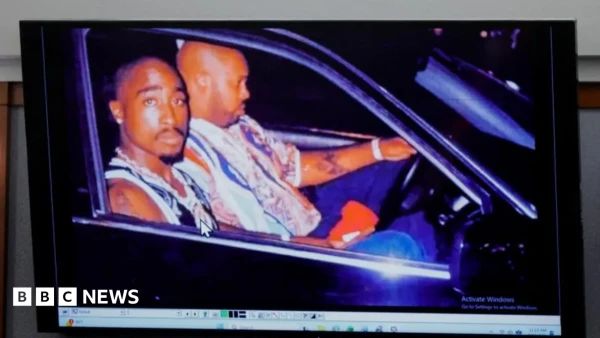
Nearly three decades after a Las Vegas drive-by shooting claimed the life of hip-hop icon Tupac Shakur, a jury has finally delivered a conviction. Former gang leader Duane "Keffe D" Davis was found guilty of one count of murder with a deadly weapon for orchestrating the 1996 assassination, bringing closure to one of America's most infamous cold cases.
The 63-year-old former leader of the South Side Compton Crips showed little emotion as the verdict was read in a Las Vegas courtroom. Shortly after the decision, Davis raised his hand to request the return of his personal items, including his phone, and immediately declared his intention to appeal.
Prosecutors successfully argued that while Davis did not pull the trigger on September 7, 1996, he masterminded the fatal attack. The shooting was characterized as a brutal act of retaliation after Davis's nephew, Orlando Anderson, was involved in a physical altercation with Shakur and his entourage earlier that evening. According to the state, Davis supplied the firearm to Anderson, who allegedly fired the fatal shots from a white Cadillac. Anderson consistently denied involvement in Shakur's death before being killed in an unrelated shooting in 1998.
The prosecution's most damning evidence ultimately came from Davis himself. For years, he publicly boasted about his involvement in the crime across various media platforms, documentaries, and his 2019 memoir, Compton Street Legend. A pivotal piece of evidence was a 2008 police interview—originally conducted during a probe into the murder of Christopher "The Notorious B.I.G." Wallace—in which Davis admitted to being in the passenger seat of the vehicle during the shooting.
Though Davis initially had a protective agreement shielding him from prosecution, the court ruled that his subsequent media tour and book publication voided that immunity, allowing his past admissions to be used against him.
During closing arguments, prosecutor Binu Palal urged the jury to take Davis at his word. "When you have the shot caller sitting shotgun when shots are fired, there's no doubt he's responsible," Palal stated.
Conversely, defense attorney Michael Sanft attempted to paint his client as a chronic exaggerator who fabricated his involvement purely for clout and financial gain, telling the jury that there was "no proof" beyond empty bravado meant to sell books.
The rapid guilty verdict brought a wave of profound emotion to the courtroom. Shakur's family members were seen crying and embracing the prosecution team, while devoted fans cheered and celebrated outside the courthouse. Shakur, who was just 25 at the height of a legendary career that saw him sell over 75 million records, had become the center of a cultural tragedy deeply rooted in the era's East Coast-West Coast rap rivalry.
District Court Judge Carli Kierny has scheduled Davis's sentencing for October 13, marking the final legal chapter in a saga that has captivated the music world for nearly thirty years.