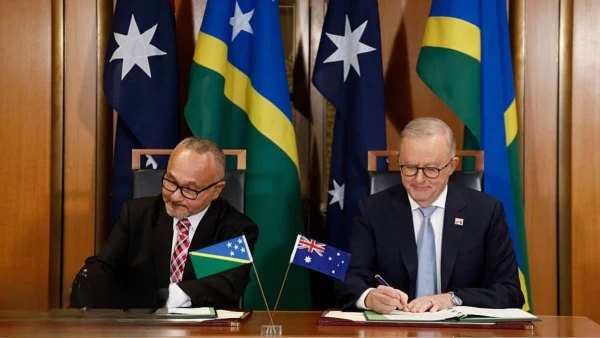
In a dramatic shift in Pacific geopolitics, the Solomon Islands has formally terminated its contentious 2022 security agreement with China, opting instead for a sweeping new treaty with Australia. The decision, announced during a high-profile press conference in Canberra, marks a decisive pivot away from Beijing’s growing influence in the region and toward a deeper partnership with Canberra.
A Strategic Reset in the Pacific
At the joint press conference, Solomon Islands Prime Minister Matthew Wale and his Australian counterpart, Prime Minister Anthony Albanese, hailed the agreement as a "historic" step toward regional stability. Wale dismissed years of uncertainty, declaring, "Those days are done, gone." The new treaty solidifies Australia as the Solomon Islands’ "security partner of choice," a move analysts say closes a chapter of instability that has long unsettled diplomats in Washington and beyond.
China’s Controversial Pact Meets Its End
The 2022 security pact with China, signed under former Solomon Islands leader Manasseh Sogavare, sparked global alarm. Though never fully disclosed, leaked excerpts revealed provisions allowing Beijing to deploy its own security personnel, establish a quasi-military presence, and exert unprecedented control over the island nation’s policing. Critics warned the deal could turn the Solomon Islands into a strategic outpost for China, intensifying a broader battle for influence between Beijing and Western powers.
China’s foreign ministry remained tight-lipped on the pact’s termination, with spokesman Guo Jiukan insisting that cooperation with Pacific nations "has no element of geopolitical rivalry." Yet the Solomon Islands’ decision to walk away—reportedly communicated to Beijing this week—signals a clear rejection of the agreement’s controversial terms.
Australia’s Pacific Advantage
The new treaty imposes strict safeguards to prevent foreign militarization. The Solomon Islands has pledged to consult Australia on critical infrastructure projects and restrict security cooperation to members of the Pacific Islands Forum—a bloc China is not part of. Crucially, the agreement bans foreign military bases on its soil and prohibits unauthorized access to sensitive facilities.
In return, Australia has committed to a A$980 million (£460.7 million) aid package, including funding for education, sports, renewable energy, and infrastructure. Visa reforms and expanded economic support aim to strengthen ties beyond security, fostering long-term stability.
A Parliament United Behind the Deal
Wale’s delegation to Canberra included two dozen Solomon Islands MPs, underscoring bipartisan support for the treaty. The move comes after years of political turmoil in Honiara, much of it centered on the country’s fraught relationship with China. Albanese emphasized that the agreement respects the Solomon Islands’ sovereignty, stating, "We’ll do that in a way that completely respects Solomon Islands sovereignty and its right to make its own decisions."
Experts Weigh In
Analysts see the pact’s collapse as a major setback for Beijing’s Pacific ambitions. Dr. Connor Graham, a research fellow at the Lowy Institute, called the China deal a "massive coup" for Beijing but noted its scale alarmed regional powers. The new treaty, he argued, "closes the loop" on Australia’s security outreach in the Pacific, following a series of agreements with neighboring nations in response to China’s growing footprint.
William Yang, Senior Analyst for North East Asia at the International Crisis Group, praised the deal as a reaffirmation of the Pacific’s traditional consensus-based decision-making. "This sends a strong signal that the region remains committed to its longstanding principles, especially in security," he said.
With China’s flagship Pacific initiative in tatters and Australia’s influence ascendant, the Solomon Islands has redrawn the geopolitical map—one that could reshape power dynamics across the Indo-Pacific for years to come.