JOHANNESBURG, South Africa – In the cramped alleys of Fordsburg, central Johannesburg, Junaid Mohammed (a pseudonym) runs a family shop that has weathered decades of change. His father started it as a general dealer; now it survives on cheap Chinese imports and thin margins. Junaid doesn't call it a decline—he calls it survival.
But the biggest shift isn't what he sells; it's who he hires. Junaid employs only foreign nationals as store assistants and packers. “It was not a deliberate choice,” he says. It began with cost, then habit, then necessity. “It became expensive to hire locals,” he explains.
South Africa's minimum wage is roughly $1.87 per hour, or about $324 monthly, plus mandatory contributions and robust labor protections. Junaid says he can't afford that. He pays about $12 a day, below the legal minimum, and hires workers only when business allows. “If we do well, we can hire more. But when we are not busy, we can say we don’t need you now,” he says.
Pressure from All Sides
Outside the shop, pressure is mounting. Vigilante groups like Operation Dudula and the March and March movement have conducted “citizen raids” on businesses accused of hiring foreign nationals, sometimes turning violent. Simultaneously, the state is tightening enforcement. President Cyril Ramaphosa has condemned vigilante actions and promised to hire 10,000 labor inspectors.
For employers like Junaid, the squeeze comes from both directions. A labor law violation could shut him down. “I don’t know what I am going to do,” he admits.
Labor, Law, and Blame
Anti-immigrant sentiment has hardened. Some groups blame undocumented migrants for unemployment and demand their removal. The government insists enforcement is about legality, but its language is blunt. Deputy Minister of Labour Jomo Sibiya told Al Jazeera: “The reason why you see a number of companies employing illegal foreign immigrants is because, for them, it’s cheap labour. It’s about exploitation. It’s about making profit.” He added that if an undocumented worker gets injured, employers have no obligation to help.
Still, Sibiya distinguishes between documented and undocumented workers. “We are not saying there shouldn’t be a foreign national who comes to work in South Africa … We are saying we can’t continue having job opportunities being taken by people who are illegally in the country,” he said.
South Africa's unemployment rate hovers around 33%, with youth unemployment exceeding 60% for those aged 15-24. Government officials argue that high unemployment makes labor enforcement both an economic and immigration issue. Employers who hire undocumented migrants can undercut legal wage standards and avoid formal obligations, they say. Undocumented workers are also vulnerable to exploitation because their status may deter them from reporting abuses.
Supporters of the crackdown believe stronger enforcement will protect labor standards and create opportunities for South Africans. Critics question whether immigration enforcement alone can fix deep-rooted unemployment.
The Inner-City Economy
Loren Landau, a migration scholar at the University of Oxford, notes that undocumented labor is concentrated in hard-to-regulate sectors. “On the job front … there are huge advantages to hiring foreigners. You can always threaten them with deportation, or non-payment.” He rejects the idea of simple preference: “Definitely, employers will exploit that. It’s rational. The fact that immigrants are not going to go to the labour department to complain makes it more appealing … It’s not an inherent preference. It’s a preference to maximise profits.”
Policy is shifting towards legal employees. A draft plan proposes fines of up to 1 million South African rand ($61,700) for hiring undocumented workers. Deputy Minister Sibiya says the aim is to cut demand: “Cut off the demand, and you are going to see less and less people coming to work illegally.”
A City Being Reshaped
Migrants are embedded in Johannesburg's informal economy—running shops, moving goods, and sustaining trade in struggling inner-city blocks. Urban planner Tanya Zack says this role is often overlooked. “A lot of money generated by migrants selling fast fashion … is important to an inner city that’s failing. If we could invest in infrastructure and policing to make it safer, you could capture more in the South African economy,” she explains.
She disputes claims that migrants operate entirely outside taxation: “There is no system for the informal economy. They are increasingly using card systems and digital banking.” Cities, she argues, are already being reshaped—policy or not.
Enforcement Without Resolution
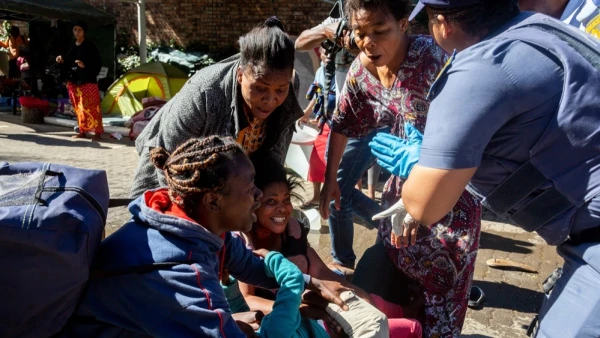
On the ground, enforcement is visible: raids, arrests, and repatriations of undocumented nationals from several African countries, emboldening anti-immigrant groups. Yet nothing feels settled. Landau describes a self-reinforcing cycle: “The day after Ramaphosa’s speech … Operation Dudula was back on the street. They have no reason to stop … It shows these movements are effective. It’s adding fuel to the fire.”
*Not his real name