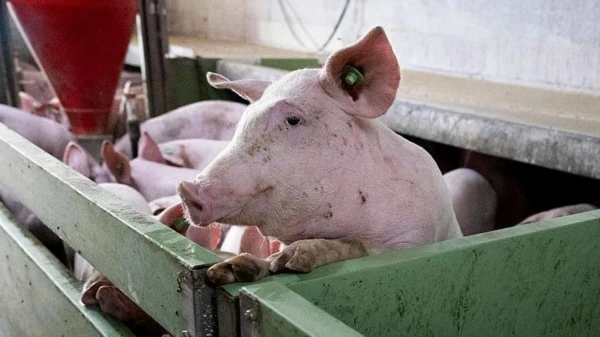
Jordi Saltiveri looks across his family's farm in Catalonia, where 8,000 pigs grunt in the distance. When African Swine Fever (ASF) was detected in Spain last November, his immediate reaction was one of helpless frustration.
"I felt sad, angry, impotent," Saltiveri recalls. "Once it's known that a country is positive for ASF, other countries will stop importing its pork."
Each pig he sells now loses €30-€40 in value compared to pre-outbreak prices, reflecting the broader crisis hitting Spain's €25 billion pork industry—the largest in Europe. The highly contagious virus, lethal to pigs and wild boars but harmless to humans, has already cost the sector over €600 million since its emergence.
Ground zero was Collserola Park, a nature area on Barcelona's outskirts, where an infected wild boar carcass was discovered. Authorities quickly restricted access and launched containment efforts, though the outbreak's origin remains unclear. Initial investigations have ruled out a leak from a nearby animal research facility.
Catalonia's agriculture minister, Òscar Ordeig, identifies wild boar overpopulation as a critical factor in the disease's spread.
"Being too permissive with wild animals has led to an overpopulation of rabbits, deer and wild boar," Ordeig explains, noting that boars have caused increased traffic accidents and disease transmission.
With an estimated 120,000-180,000 wild boars in Catalonia alone, the regional government aims to halve the population through an aggressive culling program. Using net traps, silenced firearms, drones, and cameras, officials have eliminated 24,000 boars so far this year, with 232 testing positive for ASF by late March. High-risk zones are monitored with extreme biosecurity measures, including vehicle and footwear disinfection.
The economic impact is immediate and severe. Export markets including Brazil, Japan, Mexico, South Africa, and the United States have halted Spanish pork imports entirely. Other key partners like China, the UK, and EU members have imposed regional bans affecting northeastern Spain. Catalonia's pork exports dropped 17% in January alone.
Spain faces a race against time, looking to Belgium's successful 14-month eradication as a model while hoping to avoid Germany's fate—where ASF caused a 25% production decline and thousands of farm closures. Once eliminated, a 12-month waiting period is required before Spain can regain "clean" export status.
Despite strict on-farm biosecurity, some industry voices criticize the response as insufficient. After ASF appeared beyond initial containment zones in February, Mercolleida agricultural market warned that culling efforts near Barcelona were progressing too slowly.
"Farmers across Spain are now paying the cost of ASF," the market's board stated. "Spain must not be allowed to turn into Germany."
Yet domestic confidence appears resilient. At Barcelona's Sants market, just kilometers from the outbreak's epicenter, shoppers express trust in the safety measures.
"I fully trust the safety measures that have been taken with this," says shopper Lupe López. "They have controlled it very well."
Another customer, Nati Martínez, notes increased reassurance due to enhanced controls, contrasting this outbreak with previous food safety crises. As Saltiveri watches his family's legacy farm weather the storm, Spain's pork industry battles to protect its economic cornerstone while containing a disease that threatens Europe's agricultural landscape.